For the past couple of weeks, I've been floating the idea of the "Community Rig" to basically anyone that will listen, in an effort to get some constructive feedback. A few problems remain that could end up being "deal-breakers", but the potential is there to do something novel in the metro.
The Doer Co-op has two TYT TH-9000D monoband 1.25M transceivers left over from The Aggrandizer (now "The Alincoizer") repeater. In brief, two mobile rigs were used to create a 222 MHz repeater, which is still in operation on 223.900- in NE Minneapolis. For months, we've been wondering what to do with these two rigs. Vague ideas of a remote base or cross-band link have been mentioned, but nobody has the time or interest to make those notions into reality.
In parallel with that, I've noticed that the lack of a rig keeps many local operators from exploring the 1.25M band. There are quite a few operators in town with decades of experience that have never operated on 220, and are unlikely to ever buy a monoband rig to do so. The band remains a mystery to most, though we have some decent repeaters and simplex is wide open.
My idea is to loan out these two transceivers for two months, and pass them around to various operators so that they can explore the local 1.25M scene.
Some say that they'll get ruined, lost, or simply kept. Whatever. We've got our use out of them, and the community is mostly honest people. My biggest concern is that the people who borrow them won't even use them, and they'll sit there for a couple of months in the box until they are passed along.
There are potential problems with logistics, too. Will the rigs be returned to the Co-op, or handed over to the next operator on the list? Setting up meeting times and places to hand off the transceivers could be a major hassle. It's not insurmountable, though.
The big practical issues would be that the person borrowing one of these radios would need to provide their own power supply, antenna, and coaxial cable.
The power supply isn't a big deal; 12A minimum should do it, and most operators have that already. New hams might not, though. I'm really not willing to pass around a power supply for each radio, because it just becomes more stuff that needs to be exchanged every two months.
The antenna is the biggest obstacle. People are highly unlikely to buy an antenna for something that they will only use for two months. It's not hard to make a vertical dipole out of speaker wire, or solder up a 1/4-wave ground-plane from an SO-239 and some rods...but will they actually do that?
I have a 1.25M J-pole that I got on EBay, and I could loan that out. But it's five feet long, making it a bit unwieldy for hand-offs. And it still needs a mounting solution. I'm ordering a 1/4-wave ground-plane antenna, and we'll see how that works out in practise.
The coaxial cable probably isn't a big deal, either. But who knows? Still, a length of cable is just another item to get lost in the shuffle, and it's not something specific to the band like an antenna. People should be able to provide their own coax.
It would be great to give local operators the chance to work with a rig powerful enough to do simplex across town, as well as reach local repeaters.
The first person to try this out will be WW8A (Wayne).
Showing posts with label TYT 1.25M mobile. Show all posts
Showing posts with label TYT 1.25M mobile. Show all posts
Saturday, 6 February 2016
Sunday, 21 December 2014
Cheap 1.25M option: BaoFeng UV-82X
Getting on the 1.25M isn't as easy as 2M or UHF, as the options for a rig are limited. For a full-powered rig, the TYT TH-9000D still seems to be best option, and various manufacturers make clones of this radio. The Alinco model has the DSub9 connector already installed on the back, ostensibly for packet use. Otherwise, it's the same radio. The TH-9000D is, itself, a clone of an AnyTone rig -- though AnyTone never bothered to make a model for 220 MHz.
The TH-9000D (1.25M model) is now available domestically for $150 (plus shipping), and from China for $150 (free shipping). My experience with the U.S. distributor (radio-mart.com) is that the guy takes over a week to actually ship your order, so it's not much faster than buying from China. Any problems are only resolved by shipping the radio back to China, so there's little advantage there either.
But maybe $150 is a bit too much of a gamble for a band like 1.25M, and for a monoband radio at that. Then, you have to consider an HT. Wouxun and TYT make dual-band HTs that include 1.25M, though reviews of those radios are mixed. My experience with the TYT UHF/1.25M offering is not positive, as the radio is worthless for UHF, and it's selling for over $90. The Wouxun, at $130, hardly seems worth it.
The cheapest option -- and a reasonably good one -- is the BaoFeng UV-82X. The UV-82 is, by virtually all accounts, superior to the familiar UV-5R. John at miklor.com has written up a comparison of the two. Higher output power, and better TX/RX audio are significant differences over the old UV-5R that so many roll their eyes at. The UV-82 also has two PTT buttons -- one for the "A" band, and another for "B" band. There's also a speaker mic that's compatible with this dual-button arrangement.
The UV-82X, at $50 (free shipping), seems like a pretty good option. It pushes over 5W on 2M, and the addition of an external antenna would make it an adequate home or mobile option. Certainly, this wouldn't take the place of a full-powered 50W two-metre FM mobile rig. But it would allow you to play with 220 MHz and sample the local repeater coverage, without being isolated from the activity on 2M. And it wouldn't be an expensive gamble, either.
I use an old UV-5RS in my home office. Though it has lower output power than the UV-82X, I can readably work the Columbia Heights .660 and .500 repeaters, plus the Arden Hills 223.940 machine, using nothing more than an indoor 1/4-wave whip mag-mounted to a metal paint can sitting next to the window -- from out in Plymouth. So, if you doubt that you can do anything on the band with an HT, you'd be wrong. I've also had good luck reaching these repeaters with the same 1/4-wave whip on my car driving around the west metro. If you can improve on these marginal antenna solutions, the extra power afforded by the UV-82X should allow you to do pretty well getting in to the excellent local repeater infrastructure on the band.
Locally, the repeater situation continues to improve. The 224.660- (100.0 PL) machine has excellent coverage, along with EchoLink access, and plans for cross-band linking. The 224.500- (114.8 PL) repeater isn't quite at the level of the .660, but it's now functional and is improving. The Arden Hills 223.940- (100.0 PL) remains as reliable as ever, and the link to the HandiHam network will be restored in the future. This would allow the HandiHam network to expand its coverage in the north and east, and the 1.25M band could be one of the best ways to get in for a lot of people that struggle with the VHF .450 coverage.
There are other repeaters that show potential, as well. The 223.900- (100.0 PL) still requires higher power and better antennae to access, but no one involved in that project is content with that situation. There are plans to add a 70W PA to improve range, and potential linking schemes are being considered. Likewise, the 224.940- (100.0 PL) is searching for a better site that could allow it to become one of the "big boys" on the band.
Right now, it's going to take a sustained effort to build up a core group of operators on the local 1.25M scene, and some kind of cross-band option on one of the local machines so that those who jump in on the ground floor aren't isolated from the rest of the amateur radio community.
The TH-9000D (1.25M model) is now available domestically for $150 (plus shipping), and from China for $150 (free shipping). My experience with the U.S. distributor (radio-mart.com) is that the guy takes over a week to actually ship your order, so it's not much faster than buying from China. Any problems are only resolved by shipping the radio back to China, so there's little advantage there either.
But maybe $150 is a bit too much of a gamble for a band like 1.25M, and for a monoband radio at that. Then, you have to consider an HT. Wouxun and TYT make dual-band HTs that include 1.25M, though reviews of those radios are mixed. My experience with the TYT UHF/1.25M offering is not positive, as the radio is worthless for UHF, and it's selling for over $90. The Wouxun, at $130, hardly seems worth it.
The cheapest option -- and a reasonably good one -- is the BaoFeng UV-82X. The UV-82 is, by virtually all accounts, superior to the familiar UV-5R. John at miklor.com has written up a comparison of the two. Higher output power, and better TX/RX audio are significant differences over the old UV-5R that so many roll their eyes at. The UV-82 also has two PTT buttons -- one for the "A" band, and another for "B" band. There's also a speaker mic that's compatible with this dual-button arrangement.
The UV-82X, at $50 (free shipping), seems like a pretty good option. It pushes over 5W on 2M, and the addition of an external antenna would make it an adequate home or mobile option. Certainly, this wouldn't take the place of a full-powered 50W two-metre FM mobile rig. But it would allow you to play with 220 MHz and sample the local repeater coverage, without being isolated from the activity on 2M. And it wouldn't be an expensive gamble, either.
I use an old UV-5RS in my home office. Though it has lower output power than the UV-82X, I can readably work the Columbia Heights .660 and .500 repeaters, plus the Arden Hills 223.940 machine, using nothing more than an indoor 1/4-wave whip mag-mounted to a metal paint can sitting next to the window -- from out in Plymouth. So, if you doubt that you can do anything on the band with an HT, you'd be wrong. I've also had good luck reaching these repeaters with the same 1/4-wave whip on my car driving around the west metro. If you can improve on these marginal antenna solutions, the extra power afforded by the UV-82X should allow you to do pretty well getting in to the excellent local repeater infrastructure on the band.
Locally, the repeater situation continues to improve. The 224.660- (100.0 PL) machine has excellent coverage, along with EchoLink access, and plans for cross-band linking. The 224.500- (114.8 PL) repeater isn't quite at the level of the .660, but it's now functional and is improving. The Arden Hills 223.940- (100.0 PL) remains as reliable as ever, and the link to the HandiHam network will be restored in the future. This would allow the HandiHam network to expand its coverage in the north and east, and the 1.25M band could be one of the best ways to get in for a lot of people that struggle with the VHF .450 coverage.
There are other repeaters that show potential, as well. The 223.900- (100.0 PL) still requires higher power and better antennae to access, but no one involved in that project is content with that situation. There are plans to add a 70W PA to improve range, and potential linking schemes are being considered. Likewise, the 224.940- (100.0 PL) is searching for a better site that could allow it to become one of the "big boys" on the band.
Right now, it's going to take a sustained effort to build up a core group of operators on the local 1.25M scene, and some kind of cross-band option on one of the local machines so that those who jump in on the ground floor aren't isolated from the rest of the amateur radio community.
Sunday, 7 September 2014
The Aggrandizer moves into viability
As I mentioned previously, I'm tangentially involved in an effort to put up an innovative 1.25M repeater here in the metro. The majority of the effort has come from KE0NA (Dave), with considerable help and advice from N0YNT (Matt). Originally, the repeater was planned to take the place of the failed TCRC 224.540- machine in Burnsville, as it had a duplexer, antenna, and site sitting unused. With Dave being the Vice-President of the TCRC, it seemed to be a "done deal", and the TCRC would be the test bed for an innovative concept -- which is kind of what radio clubs are supposed to do.
No such luck, however. The President of the TCRC, WB0JMG (Artie), unilaterally decreed not only that the repeater we designed would not be put into service on any TCRC site, but he also strictly forbade any club "resources" to be used in the effort -- such as advice or technical help.
Surely this innovative repeater design must be some kind of dangerous and crazy scheme, right? The wisest course would be to deny the amateur community the use of of one of the few 1.25M repeaters for months on end, rather than take the outrageous risk of even testing this concept, which is clearly doomed to failure and disgrace. Right? That's the only reasonable explanation.
So, what is this wild and uproariously laughable idea that must be put down and unceremoniously buried?
It's simply this: put two TYT TH-9000 mobile 1.25M transceivers back to back, with a controller mediating.
Gear for the 222 MHz band is hard to come by. There aren't a lot of old commercial repeaters sitting around (as is the case with 2M and 70cm) to press into service and use in amateur radio. The TH-9000 is uniquely designed to be used as a repeater, with an internal header that provides TX and RX audio, COS, PTT, and +5 vDC. It only has about 45W RF output, but it can certainly drive a PA. Even at 45W, the metro area could be fairly well covered, especially with a good site and antenna.
Since this is different from how repeaters are normally operated, there was no shortage of "experts" dismissing the idea out-of-hand. We can't be 'experimenting', after all. This is amateur radio! There are no new ideas; only bad ones that experts laugh at.
Undeterred, we went ahead with the project. Barred from using any TCRC expertise, Matt set up a controller. Matt is a member of the TCRC (as am I), but we are not part of the club's "Tech Team", and so we considered ourselves unbound by the President's decree. The repeater, now named "The Aggrandizer", was field tested at the July AITP event. It didn't "de-sense", and worked an HT from about a mile away. Moving forward from that point, I prevailed upon K0LAV (Paul) and K9EQ (Chris) for advice, and Dave consulted with KA0KMJ (John), as these were hams free of any restrictions placed on them by the TCRC.
As it now stands, Dave has set up a transmitting antenna at his home in NE Minneapolis for The Aggrandizer. He got it provisionally co-ordinated for 224.240-, which is the 1.25M SNP pair. As he mastered the mysteries of the controller, he set up a voice ID to "beacon" every ten minutes. The next step is the installation of a receiving antenna, which is challenging because he doesn't have a duplexer. Like everything else on 1.25M, duplexers are quite scarce.
KA0KMJ confirmed last week the the signal was reaching his home in Osseo. I also drove around Crystal, New Hope, Plymouth, and Golden Valley listening to the beacon on my Kenwood F6-A. The antenna at Dave's is only about 25 feet up, and in an area that isn't particularly elevated, but I received the signal at S9 in most places on my drive. There were some low spots at only S2, but that's to be expected with a "compromise" site.
The propagation characteristics of the 222 MHz band are pretty favourable for amateur use. It has coverage beyond "line of sight" like VHF, but it still has some ability to reflect off objects like UHF. Ideally, 1.25M is a better choice for urban and suburban amateur radio than 2M is, but 2M got a huge advantage in the early goings from the availability of VHF commercial gear.
At some point, this project will produce a working 1.25M repeater. It will probably happen before the TCRC gets the .540 back on the air. If the TCRC would relent, it could be on the air immediately, and I would happily provide a 100W PA to make it the best 1.25M repeater in the State. They have a duplexer and antenna on a great site that are just sitting unused.
Let's look at the Mission Statement of the Twin Cities Repeater Club:
I know that KE0NA has described the experience gained from this project as "priceless". It's certainly been an educational experience for me as well, in my limited role. And KD0ZWN (Josh) has been inspired to experiment with Raspberry Pi controllers due to his involvement in this secretive and forbidden project. Even the experienced hams that we asked for advice had to do a little "re-thinking" of the conventional wisdom.
The Aggrandizer will on display (in all its horror) at the September AITP event next weekend, where another field test will be done. Bring a 222 MHz HT and test it out.
Dave has documented every step of this effort meticulously. He will be able to produce step-by-step instructions that will enable virtually any ham to replicate this for themselves. This information will be available on this blog. There is documentation to show you how to wire the headers of the TH-9000. There is detailed information on how to connect a controller between the two radios. He explains how to add extra heat sink capability. With sufficient vertical separation between the TX and RX antennae, or with a split site arrangement, you can create your own repeater without a duplexer. Of course, this is all a lot easier on UHF, where there is 5 MHz separating the TX and RX frequencies, and duplexers for the band are plentiful and relatively cheap. And, at the end of day, if you wish to take it all down, you have two new mobile transceivers rather than one ancient repeater.
It's not just repeaters that are made relatively simple by the accommodations of the TH-9000. APRS digipeaters and gateways are made possible with the VHF model. Auxiliary RF links between repeaters for cross-band functionality or remote receive sites are also likewise simplified with the UHF model. Connections for EchoLink, too, are simplified. You can set up that simplex node that you've thought about. Unlike two metres, there are a whole lot of open frequency pairs on 222 MHz to set up repeaters on, even at the 'hobby' level. Experiment! Set up the first EchoLink-capable 1.25M repeater in the State. Make a cross-band UHF/1.25M repeater happen. Set up 1.25M APRS. Why not have a VHF digipeater at your cabin? It's all possible, and it's all an excellent chance to learn and teach others from your experience.
As Dave makes progress, your signal reports will be helpful. The beacon isn't always on, but if you hear it on 224.240, it would be nice for us to know. When the receiving antenna goes up, those reports will be even more valuable. If nothing else, check out this innovative repeater at the AITP event. Maybe you will be inspired to join the effort...unless someone orders you not to.
It's gratifying to me that there are experienced hams out there willing to think "outside the box" and help bring new projects into being. I especially appreciate people like Dave and Matt, who say "Let's make it happen!" instead of smugly explaining "That will never work!". The purveyors of 'conventional wisdom' are many, and they receive a disproportionate amount of respect for merely parroting the worn-out notion that FM is limited to two metres.
Have we, as a community, become so hidebound and backward-looking that we risk becoming a parody of the visionaries that first established the two-metre infrastructure here in the metro? Are our clubs, which were supposed to leverage the power of their membership into progress, now nothing more than museums and refuges for those obsessed with preserving the past? If so, then the hobby has to look to the few that can still summon the spirit that will move us into the future.
EDIT: Apparently some people are confused as to the difference between the TCRC and the TCFMC. KE0NA is the VP of the TCRC, not the TCFMC. This post has nothing to with the TCFMC.
EDIT: N0FKM (Dan) has approached N0YNT (Matt) with a potential offer of practical help with this project, possibly teaming up with Dave and Matt to put The Aggrandizer on the air. Dan operates repeaters on three bands in the metro.
No such luck, however. The President of the TCRC, WB0JMG (Artie), unilaterally decreed not only that the repeater we designed would not be put into service on any TCRC site, but he also strictly forbade any club "resources" to be used in the effort -- such as advice or technical help.
Surely this innovative repeater design must be some kind of dangerous and crazy scheme, right? The wisest course would be to deny the amateur community the use of of one of the few 1.25M repeaters for months on end, rather than take the outrageous risk of even testing this concept, which is clearly doomed to failure and disgrace. Right? That's the only reasonable explanation.
So, what is this wild and uproariously laughable idea that must be put down and unceremoniously buried?
It's simply this: put two TYT TH-9000 mobile 1.25M transceivers back to back, with a controller mediating.
Gear for the 222 MHz band is hard to come by. There aren't a lot of old commercial repeaters sitting around (as is the case with 2M and 70cm) to press into service and use in amateur radio. The TH-9000 is uniquely designed to be used as a repeater, with an internal header that provides TX and RX audio, COS, PTT, and +5 vDC. It only has about 45W RF output, but it can certainly drive a PA. Even at 45W, the metro area could be fairly well covered, especially with a good site and antenna.
Since this is different from how repeaters are normally operated, there was no shortage of "experts" dismissing the idea out-of-hand. We can't be 'experimenting', after all. This is amateur radio! There are no new ideas; only bad ones that experts laugh at.
Undeterred, we went ahead with the project. Barred from using any TCRC expertise, Matt set up a controller. Matt is a member of the TCRC (as am I), but we are not part of the club's "Tech Team", and so we considered ourselves unbound by the President's decree. The repeater, now named "The Aggrandizer", was field tested at the July AITP event. It didn't "de-sense", and worked an HT from about a mile away. Moving forward from that point, I prevailed upon K0LAV (Paul) and K9EQ (Chris) for advice, and Dave consulted with KA0KMJ (John), as these were hams free of any restrictions placed on them by the TCRC.
As it now stands, Dave has set up a transmitting antenna at his home in NE Minneapolis for The Aggrandizer. He got it provisionally co-ordinated for 224.240-, which is the 1.25M SNP pair. As he mastered the mysteries of the controller, he set up a voice ID to "beacon" every ten minutes. The next step is the installation of a receiving antenna, which is challenging because he doesn't have a duplexer. Like everything else on 1.25M, duplexers are quite scarce.
KA0KMJ confirmed last week the the signal was reaching his home in Osseo. I also drove around Crystal, New Hope, Plymouth, and Golden Valley listening to the beacon on my Kenwood F6-A. The antenna at Dave's is only about 25 feet up, and in an area that isn't particularly elevated, but I received the signal at S9 in most places on my drive. There were some low spots at only S2, but that's to be expected with a "compromise" site.
The propagation characteristics of the 222 MHz band are pretty favourable for amateur use. It has coverage beyond "line of sight" like VHF, but it still has some ability to reflect off objects like UHF. Ideally, 1.25M is a better choice for urban and suburban amateur radio than 2M is, but 2M got a huge advantage in the early goings from the availability of VHF commercial gear.
At some point, this project will produce a working 1.25M repeater. It will probably happen before the TCRC gets the .540 back on the air. If the TCRC would relent, it could be on the air immediately, and I would happily provide a 100W PA to make it the best 1.25M repeater in the State. They have a duplexer and antenna on a great site that are just sitting unused.
Let's look at the Mission Statement of the Twin Cities Repeater Club:
The purpose of the TCRC is to facilitate the local communication needs of its members by owning and operating a state of the art wide area coverage two meter repeater system. The club will further involve itself in secondary activities intended to (1) promote the exchange of ideas and information related to amateur radio, (2) strengthen the fellowship and camaraderie among the members, (3) serve the local amateur radio community, and (4) increase local public safety.Okay, so it's all about 2M now. Good to know. Maybe we already did. I'm left wondering how an Order of Silence from the President on this project promotes "the exchange of ideas and information related to amateur radio", though. If this concept works, it could make it pretty easy to not only set up 1.25M repeaters in any community, but also UHF repeaters, since there are UHF TH-9000's. We can't allow hams to set up cheap repeaters and learn how duplexers and controllers work, can we? It's all so "experimental", which is what amateur radio is apparently there to prevent. These secrets must be carefully guarded, and only revealed to those that our Wise Elders deem worthy... and in possession of sufficient disposable income.
I know that KE0NA has described the experience gained from this project as "priceless". It's certainly been an educational experience for me as well, in my limited role. And KD0ZWN (Josh) has been inspired to experiment with Raspberry Pi controllers due to his involvement in this secretive and forbidden project. Even the experienced hams that we asked for advice had to do a little "re-thinking" of the conventional wisdom.
The Aggrandizer will on display (in all its horror) at the September AITP event next weekend, where another field test will be done. Bring a 222 MHz HT and test it out.
Dave has documented every step of this effort meticulously. He will be able to produce step-by-step instructions that will enable virtually any ham to replicate this for themselves. This information will be available on this blog. There is documentation to show you how to wire the headers of the TH-9000. There is detailed information on how to connect a controller between the two radios. He explains how to add extra heat sink capability. With sufficient vertical separation between the TX and RX antennae, or with a split site arrangement, you can create your own repeater without a duplexer. Of course, this is all a lot easier on UHF, where there is 5 MHz separating the TX and RX frequencies, and duplexers for the band are plentiful and relatively cheap. And, at the end of day, if you wish to take it all down, you have two new mobile transceivers rather than one ancient repeater.
It's not just repeaters that are made relatively simple by the accommodations of the TH-9000. APRS digipeaters and gateways are made possible with the VHF model. Auxiliary RF links between repeaters for cross-band functionality or remote receive sites are also likewise simplified with the UHF model. Connections for EchoLink, too, are simplified. You can set up that simplex node that you've thought about. Unlike two metres, there are a whole lot of open frequency pairs on 222 MHz to set up repeaters on, even at the 'hobby' level. Experiment! Set up the first EchoLink-capable 1.25M repeater in the State. Make a cross-band UHF/1.25M repeater happen. Set up 1.25M APRS. Why not have a VHF digipeater at your cabin? It's all possible, and it's all an excellent chance to learn and teach others from your experience.
 |
| Behold The Aggrandizer! |
It's gratifying to me that there are experienced hams out there willing to think "outside the box" and help bring new projects into being. I especially appreciate people like Dave and Matt, who say "Let's make it happen!" instead of smugly explaining "That will never work!". The purveyors of 'conventional wisdom' are many, and they receive a disproportionate amount of respect for merely parroting the worn-out notion that FM is limited to two metres.
Have we, as a community, become so hidebound and backward-looking that we risk becoming a parody of the visionaries that first established the two-metre infrastructure here in the metro? Are our clubs, which were supposed to leverage the power of their membership into progress, now nothing more than museums and refuges for those obsessed with preserving the past? If so, then the hobby has to look to the few that can still summon the spirit that will move us into the future.
EDIT: Apparently some people are confused as to the difference between the TCRC and the TCFMC. KE0NA is the VP of the TCRC, not the TCFMC. This post has nothing to with the TCFMC.
EDIT: N0FKM (Dan) has approached N0YNT (Matt) with a potential offer of practical help with this project, possibly teaming up with Dave and Matt to put The Aggrandizer on the air. Dan operates repeaters on three bands in the metro.
Sunday, 10 August 2014
Copy that?
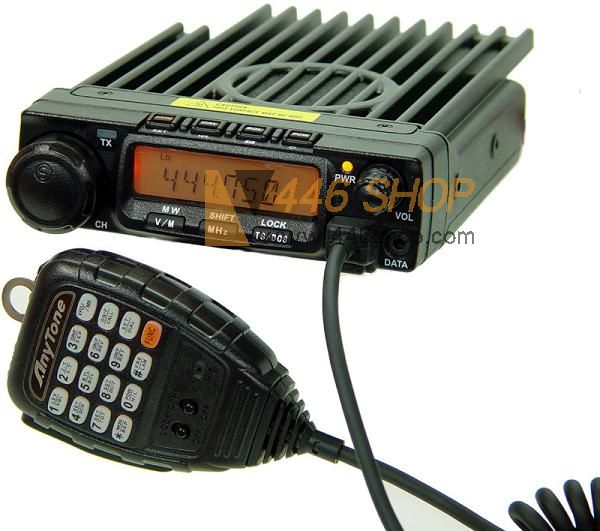
In the beginning, there was the AnyTone AT-588. The market beheld it, and saw that it was good.
The AT-588 was the standard for Chinese FM mobiles. Originally marketed for taxis, delivery vehicle fleets, construction sites, and quasi-law enforcement use, the success of the BaoFeng HT revealed the potential of the amateur radio market. At the time, Japanese FM monoband radios were much more expensive than now. The emergence of the AT-588 put pressure on Japanese manufacturers to both lower prices and also come up with more "basic" mobiles. It's currently not hard to find a Kenwood TM-281A or Yaesu FT-1900R for around $160, while you would have paid around $230 two years ago. The AT-588 is now selling for roughly the same price as its Japanese counterparts, which squeezes Anytone's profit margins.
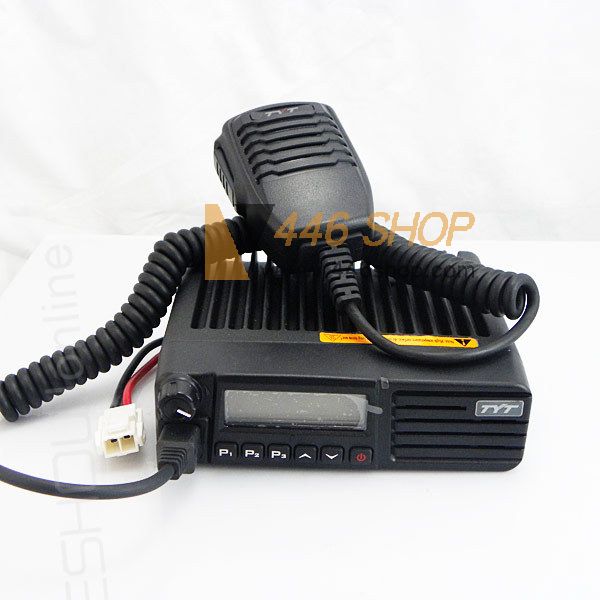
While AnyTone bore the development costs of the AT-588 (dies and tooling, engineering, supplier prototyping of components, testing, etc.), other Chinese manufacturers were able to simply copy the AT-588 and save those costs. The TYT TH-9000 is virtually identical to the AT-588, except for the silk-screening on the front and the die-cast case around the speaker. TYT's more 'original' monoband -- the TH-8900 -- didn't sell as well. AnyTone successfully sued TYT in Chinese courts (amazing in itself) for what amounted to copyright infringement (which is highly ironic). The TH-9000 was ordered to be discontinued.
Thus, the TH-9000D was born, which was imperceptibly changed just enough to avoid further legal action.
Other Chinese manufacturers, however, are jumping into the fray and under-cutting the under-cutters.
Take a look at the TID TD-M558 monoband, which is currently arriving on the market. TID even copied the lousy microphone design that TYT 'pioneered'. Or check out the Vitai VT-5188 monoband FM radio. The Zastone MP-600 is another option. Or the identical Luiton LT-9000 monoband. How about the VGC VR-2200? The AnyTalk TM-8600 at least mixes things up a bit by putting the mic jack on the left side of the radio and re-arranging the buttons.
If you are worried that a Motorola CM-300 monoband rig might seem too pretentious, you can get a Motola (no, that's not mis-spelled) EM-300 from KST.
Notice any similarities between the HYS TC-171 and the (now discontinued) Kenwood TM-271 monoband?
Also intriguing is the Vitai FT-857D. It's a copy of the Yaesu FT-857D, only with a detachable face. They didn't even bother to change the model name. It ships with a copy of the Yaesu manual, in fact. It seems that Vitai is actually a supplier to the big Japanese brands Icom, Kenwood, Yaesu, and also Motorola. Those hams that spurn "Chinese junk" and buy a Japanese model may very well end up with a Chinese-made radio.
I think that it's unlikely we'll see a flood of knock-off HF radios, however.. The market for AM/SSB/CW HF radios is quite small, when compared to FM. And FM is only used on 10M (as far as HF goes), and even then only by General Class licensees or above.
Certainly, YouKits has had some success with QRP CW rigs (HB-1A and its variants). They are currently developing a 40/20/15/10M SSB/CW 20W portable rig -- the TJ5A -- for $455 (assembled) with battery and pack. And the 5W TJ2B (think large HT form-factor) for 60/40/20/17/15M SSB radio has been popular, and can be made to work PSK with external equipment. CRKits also makes a very bare-bones 40M SSB single-frequency 10W rig for $220 assembled with speaker mic. And $80 will get you their bare-bones 3W CW 40M single-frequency transceiver (assembled and without batteries).
But these are all niche efforts that don't involve copying, and aren't even priced particularly competitive level. With new 100W HF transceivers starting at $1k, these are more aimed at the entry-level ham market, though not at Technician Class licensees -- which are about half of the U.S. market. I think that it's quite doubtful that we will ever see cheap Chinese 6M SSB/CW rigs or 2M/1.25M/70cm "weak signal" radios.
There aren't even very good 10M options. The AnyTone AT-5555 is a relatively low-power rig, with 12W on CW and only 30W on SSB, and costs $210. This is pretty much the standard price/power range for most 10M "weak-signal" rigs, regardless of who makes them. A bit more promising is the AnyTone AT-6666, which is available for $250. It offers 60W on SSB. It has no CW capability, however.
While the Chinese manufacturers have revolutionised 2M and UHF FM ham radio, it seems unlikely to spread further. The target market was never amateur radio anyway; it was commercial and public service users forced into narrow-band by the FCC. That effort was largely stymied by the FCC's Part 90 standards and certification. The "VFO" button on the BaoFengs, for example, made them forbidden for Part 90 use. It didn't stop them from being certified for Part 95 use, though. Thus, the Chinese settled for the amateur radio market, while developing new models that did comply with Part 90.
The future will probably hold further copying, as some manufacturers try to cash in on the fading wave. But prices really can't fall much lower, and the amateur market is already saturated. It seems as if every ham has at least one Chinese HT, especially new hams. There's a limit to how many people are willing to get a licence, and new hams often find that their shiny, new Chinese HT or mobile is met with derisive scorn by those that they hoped to join. In five years, we'll look back on this as some kind of Golden Age of growth for the hobby, as so many of those even mildly intrigued by the potential of amateur radio will have been dissuaded from pursuing it -- and will have told others what to expect.
The AT-588 was the standard for Chinese FM mobiles. Originally marketed for taxis, delivery vehicle fleets, construction sites, and quasi-law enforcement use, the success of the BaoFeng HT revealed the potential of the amateur radio market. At the time, Japanese FM monoband radios were much more expensive than now. The emergence of the AT-588 put pressure on Japanese manufacturers to both lower prices and also come up with more "basic" mobiles. It's currently not hard to find a Kenwood TM-281A or Yaesu FT-1900R for around $160, while you would have paid around $230 two years ago. The AT-588 is now selling for roughly the same price as its Japanese counterparts, which squeezes Anytone's profit margins.
While AnyTone bore the development costs of the AT-588 (dies and tooling, engineering, supplier prototyping of components, testing, etc.), other Chinese manufacturers were able to simply copy the AT-588 and save those costs. The TYT TH-9000 is virtually identical to the AT-588, except for the silk-screening on the front and the die-cast case around the speaker. TYT's more 'original' monoband -- the TH-8900 -- didn't sell as well. AnyTone successfully sued TYT in Chinese courts (amazing in itself) for what amounted to copyright infringement (which is highly ironic). The TH-9000 was ordered to be discontinued.

Thus, the TH-9000D was born, which was imperceptibly changed just enough to avoid further legal action.
Other Chinese manufacturers, however, are jumping into the fray and under-cutting the under-cutters.
Take a look at the TID TD-M558 monoband, which is currently arriving on the market. TID even copied the lousy microphone design that TYT 'pioneered'. Or check out the Vitai VT-5188 monoband FM radio. The Zastone MP-600 is another option. Or the identical Luiton LT-9000 monoband. How about the VGC VR-2200? The AnyTalk TM-8600 at least mixes things up a bit by putting the mic jack on the left side of the radio and re-arranging the buttons.
If you are worried that a Motorola CM-300 monoband rig might seem too pretentious, you can get a Motola (no, that's not mis-spelled) EM-300 from KST.
Notice any similarities between the HYS TC-171 and the (now discontinued) Kenwood TM-271 monoband?
Also intriguing is the Vitai FT-857D. It's a copy of the Yaesu FT-857D, only with a detachable face. They didn't even bother to change the model name. It ships with a copy of the Yaesu manual, in fact. It seems that Vitai is actually a supplier to the big Japanese brands Icom, Kenwood, Yaesu, and also Motorola. Those hams that spurn "Chinese junk" and buy a Japanese model may very well end up with a Chinese-made radio.
I think that it's unlikely we'll see a flood of knock-off HF radios, however.. The market for AM/SSB/CW HF radios is quite small, when compared to FM. And FM is only used on 10M (as far as HF goes), and even then only by General Class licensees or above.
Certainly, YouKits has had some success with QRP CW rigs (HB-1A and its variants). They are currently developing a 40/20/15/10M SSB/CW 20W portable rig -- the TJ5A -- for $455 (assembled) with battery and pack. And the 5W TJ2B (think large HT form-factor) for 60/40/20/17/15M SSB radio has been popular, and can be made to work PSK with external equipment. CRKits also makes a very bare-bones 40M SSB single-frequency 10W rig for $220 assembled with speaker mic. And $80 will get you their bare-bones 3W CW 40M single-frequency transceiver (assembled and without batteries).
But these are all niche efforts that don't involve copying, and aren't even priced particularly competitive level. With new 100W HF transceivers starting at $1k, these are more aimed at the entry-level ham market, though not at Technician Class licensees -- which are about half of the U.S. market. I think that it's quite doubtful that we will ever see cheap Chinese 6M SSB/CW rigs or 2M/1.25M/70cm "weak signal" radios.
There aren't even very good 10M options. The AnyTone AT-5555 is a relatively low-power rig, with 12W on CW and only 30W on SSB, and costs $210. This is pretty much the standard price/power range for most 10M "weak-signal" rigs, regardless of who makes them. A bit more promising is the AnyTone AT-6666, which is available for $250. It offers 60W on SSB. It has no CW capability, however.
While the Chinese manufacturers have revolutionised 2M and UHF FM ham radio, it seems unlikely to spread further. The target market was never amateur radio anyway; it was commercial and public service users forced into narrow-band by the FCC. That effort was largely stymied by the FCC's Part 90 standards and certification. The "VFO" button on the BaoFengs, for example, made them forbidden for Part 90 use. It didn't stop them from being certified for Part 95 use, though. Thus, the Chinese settled for the amateur radio market, while developing new models that did comply with Part 90.
The future will probably hold further copying, as some manufacturers try to cash in on the fading wave. But prices really can't fall much lower, and the amateur market is already saturated. It seems as if every ham has at least one Chinese HT, especially new hams. There's a limit to how many people are willing to get a licence, and new hams often find that their shiny, new Chinese HT or mobile is met with derisive scorn by those that they hoped to join. In five years, we'll look back on this as some kind of Golden Age of growth for the hobby, as so many of those even mildly intrigued by the potential of amateur radio will have been dissuaded from pursuing it -- and will have told others what to expect.
Saturday, 12 July 2014
1.25M repeater from mobiles
N0YNT (Matt) and KE0NA (Dave) have put together a working repeater from two TYT TH-9000s and a controller. As I explained previously here and here, the TH-9000 is uniquely set up to accommodate an interface with a controller. After the TCRC's .540 repeater on 1.25M was taken out of service, Matt, Dave and I considered replacing it with a pair of TH-9000s and using the TCRC's antenna and duplexer.
Unfortunately, the TCRC balked at the proposition. Instead of abandoning the concept, though, we moved ahead. My role merely consisted of getting a 1.25M TH-9000D. Dave wired a cable to the radios' interface, added an extra heat sink, and mounted it all on a rack shelf. Matt got a new, advanced, three-port controller. I watched as Matt and Dave connected the controller and worked out the issues last Monday. It was tested with a dummy load and a mag-mount whip, and found to actually function as a repeater. It was nicknamed "The Aggrandizer".
At this point, it's all experimental. There is no confirmed site, nor co-ordinated frequency. But the principle is sound, and has been proven out.
At some point, the documentation will be put together for this project. From that information, it should be relatively easy for someone to duplicate this with VHF or UHF models of the TH-9000D. Simple repeaters could be thrown together fairly cheaply and easily -- even cross-band. Remote receive sites, translators, digipeaters, and temporary field repeaters also become much simpler. And you can always take it apart and use the radios as standard mobile or base radios -- which is something that you can't do with a 'real' repeater.
While an expensive controller was used in this case, there are sub-$100 options out there for a "no frills, no thrills" hobby repeater. A field test has shown that, on 1.25M (1.6MHz offset), there is absolutely no "de-sensing" at 10W output without a duplexer. Higher power levels weren't tested, but 25W could be practical. UHF pairs have a much greater 5 MHz offset, and higher power levels should be practical without suffering the losses associated with a duplexer. The transmitter radio draws only 12A at full power, with the receive radio drawing less than 1A. But full power on the UHF model is 40W, and antenna quality and elevation is more important than raw power on that band.
Since 1.25M equipment is so scarce, this arrangement might be the only acceptable way to set up a 1.25M repeater for some. TH-9000D mobiles are sold for around $150. Sure, you can probably get an old repeater for the price of two mobiles, but these are brand new with warranty. And you'll have two new FM transceivers, instead of one clunky relic.
This isn't to say that this "mobile repeater" can take the place of any repeater. It's an inexpensive and flexible option, however, requiring little technical expertise.
Photo courtesy of Chuck Marshall - KD0UIH
Unfortunately, the TCRC balked at the proposition. Instead of abandoning the concept, though, we moved ahead. My role merely consisted of getting a 1.25M TH-9000D. Dave wired a cable to the radios' interface, added an extra heat sink, and mounted it all on a rack shelf. Matt got a new, advanced, three-port controller. I watched as Matt and Dave connected the controller and worked out the issues last Monday. It was tested with a dummy load and a mag-mount whip, and found to actually function as a repeater. It was nicknamed "The Aggrandizer".
At this point, it's all experimental. There is no confirmed site, nor co-ordinated frequency. But the principle is sound, and has been proven out.
At some point, the documentation will be put together for this project. From that information, it should be relatively easy for someone to duplicate this with VHF or UHF models of the TH-9000D. Simple repeaters could be thrown together fairly cheaply and easily -- even cross-band. Remote receive sites, translators, digipeaters, and temporary field repeaters also become much simpler. And you can always take it apart and use the radios as standard mobile or base radios -- which is something that you can't do with a 'real' repeater.
While an expensive controller was used in this case, there are sub-$100 options out there for a "no frills, no thrills" hobby repeater. A field test has shown that, on 1.25M (1.6MHz offset), there is absolutely no "de-sensing" at 10W output without a duplexer. Higher power levels weren't tested, but 25W could be practical. UHF pairs have a much greater 5 MHz offset, and higher power levels should be practical without suffering the losses associated with a duplexer. The transmitter radio draws only 12A at full power, with the receive radio drawing less than 1A. But full power on the UHF model is 40W, and antenna quality and elevation is more important than raw power on that band.
Since 1.25M equipment is so scarce, this arrangement might be the only acceptable way to set up a 1.25M repeater for some. TH-9000D mobiles are sold for around $150. Sure, you can probably get an old repeater for the price of two mobiles, but these are brand new with warranty. And you'll have two new FM transceivers, instead of one clunky relic.
This isn't to say that this "mobile repeater" can take the place of any repeater. It's an inexpensive and flexible option, however, requiring little technical expertise.
 |
| Behold "The Aggrandizer": two TH-9000s with Arcom controller |
Thursday, 29 May 2014
TYT TH-9000 is back
I previously noted that TYT had lost a court case in China and was forced to discontinue sales and production of the TH-9000 radio.
Well, the TH-9000 is back and cheaper than ever! Now, however, it's called the TH-9000D. I guess that makes a difference to the Chinese attorneys.
The radio looks identical to the banned TH-9000, even down to the poorly-designed microphone. The specs and features are the same. The price is lower, though. Radio-mart is one of the first American retailers to offer the "new" mobile: $150 for UHF, $156 for 1.25M, and $156 for VHF. They were around $185 before, regardless of the band covered.
I didn't cover this before, but I dug up the info on the D-sub header accessible from the rear on these radios. There's a six-pin header that a patient ham can solder leads to, and this makes the TH-9000 into a repeater-capable rig that can drive a PA and also connect to a controller. The pin-out is thus:
pin 1: ground
pin 2: transmit audio
pin3: COS
pin 4: receive audio
pin 5: PTT
pin 6: +5 Vdc
The two-metre model puts out 60W, and the UHF model has a respectable 45W out. But the heat sink gets pretty hot at the high power setting. Even with a cooling fan, I'd be sceptical of using it "barefoot" as a repeater at full power. The "mid" power setting of 25W (all models) is sustainable, however -- especially if it's cooled. 25W on UHF is a decent "hobby" repeater level, and it could also be "okay" on 1.25M. The UHF Robbinsdale .775 repeater is only 12W, after all. Of course, you could buy two and connect them to a controller, running at full power. When the first one burns out, swap them and use the first as a receiver until the second burns out. It's still cheaper than buying a "real" repeater.
Of course, the better idea is to run the rig at 25W and use it to drive a PA (power amplifier). The radio actually has good audio when it's not used as narrow-band, and the header access lets you avoid the microphone. At full power, the TH-9000D only uses 12A, and I've operated at 25W with a 7A supply. This is one of the suggestions that I offered KE0NA (Dave) Wednesday night just before he shut down the 224.540 TCRC repeater. It seems that the PA is fine, and it seems that the transmit audio is fine. Just use a TH-9000D 1.25M mobile as a receiver and run the RX audio into the controller, while keeping the repeater. Maybe it's more complicated than that, but the point I'm making here is that the TH-9000D is more flexible than your average mobile because of that six-pin header.
For VHF, and even UHF, there are higher-quality rigs on the market than the TH-9000D. For example, a new Kenwood TH-281A can be had for $165, and a Yaesu FT-1900R is only $175. That's pretty competitive as far as price and features. But when it comes to 222 MHz, it's hard to beat the TH-9000D, even if you don't use it for a repeater.
Well, the TH-9000 is back and cheaper than ever! Now, however, it's called the TH-9000D. I guess that makes a difference to the Chinese attorneys.
The radio looks identical to the banned TH-9000, even down to the poorly-designed microphone. The specs and features are the same. The price is lower, though. Radio-mart is one of the first American retailers to offer the "new" mobile: $150 for UHF, $156 for 1.25M, and $156 for VHF. They were around $185 before, regardless of the band covered.
I didn't cover this before, but I dug up the info on the D-sub header accessible from the rear on these radios. There's a six-pin header that a patient ham can solder leads to, and this makes the TH-9000 into a repeater-capable rig that can drive a PA and also connect to a controller. The pin-out is thus:
pin 1: ground
pin 2: transmit audio
pin3: COS
pin 4: receive audio
pin 5: PTT
pin 6: +5 Vdc
The two-metre model puts out 60W, and the UHF model has a respectable 45W out. But the heat sink gets pretty hot at the high power setting. Even with a cooling fan, I'd be sceptical of using it "barefoot" as a repeater at full power. The "mid" power setting of 25W (all models) is sustainable, however -- especially if it's cooled. 25W on UHF is a decent "hobby" repeater level, and it could also be "okay" on 1.25M. The UHF Robbinsdale .775 repeater is only 12W, after all. Of course, you could buy two and connect them to a controller, running at full power. When the first one burns out, swap them and use the first as a receiver until the second burns out. It's still cheaper than buying a "real" repeater.
Of course, the better idea is to run the rig at 25W and use it to drive a PA (power amplifier). The radio actually has good audio when it's not used as narrow-band, and the header access lets you avoid the microphone. At full power, the TH-9000D only uses 12A, and I've operated at 25W with a 7A supply. This is one of the suggestions that I offered KE0NA (Dave) Wednesday night just before he shut down the 224.540 TCRC repeater. It seems that the PA is fine, and it seems that the transmit audio is fine. Just use a TH-9000D 1.25M mobile as a receiver and run the RX audio into the controller, while keeping the repeater. Maybe it's more complicated than that, but the point I'm making here is that the TH-9000D is more flexible than your average mobile because of that six-pin header.
For VHF, and even UHF, there are higher-quality rigs on the market than the TH-9000D. For example, a new Kenwood TH-281A can be had for $165, and a Yaesu FT-1900R is only $175. That's pretty competitive as far as price and features. But when it comes to 222 MHz, it's hard to beat the TH-9000D, even if you don't use it for a repeater.
Thursday, 15 May 2014
TYT 1.25M rig discontinued
TYT lost a court case and has been forced to quit making their TH-9000 monoband radios. They are disappearing from the shelves quickly. While there are plenty of 50W+ VHF rigs out there, and some 40W+ UHF rigs, the 1.25M (222 MHz) model will be the most sorely missed.
At 50W+, for well under $200, the TH-9000 222 MHz mobile has been an exceptional deal for several months now. I looked at the options for rigs on 1.25M previously, and the Jetstream JT220M is a virtually identical radio to the TH-9000. It has the same poorly-designed mic. The 'major' differences are that the buttons aren't assignable by the software (so they are labelled) and the backlight doesn't change colours, unlike the TH-9000. And it costs about $30 more than the TH-9000.
Realistically, you don't need 50 watts to work local repeaters, especially if you can spin a 1/4-wave ground-plane from an SO-239 connector and hang it outdoors. I have no trouble working FM simplex with 10W using my 3-element Yagi from Centerfire, and I just point it east to reach all of the repeaters quite well at that power level from Plymouth. Judging by my recent experience with the Arden Hills 223.940 using 5W, a mobile with 25W could reach the metro through the .940 solidly to Rush City. And, when the link to the HandiHam network is ever restored on that machine, you'd have access to VHF and UHF cross-band -- not to mention any EchoLink arrangements that could establish links to local machines through the .940 repeater.
One of the interesting things about the TH-9000 is that it has a barely-concealed DB-9 output on the back allowing you access to TX and RX audio, COS, PTT, and 5vdc. This means that it's easily pressed into service as a repeater, at least in theory. In practise, it gets pretty hot at 50W+ pretty quickly, though it could run at the "mid" power level of 25W fairly reliably. Even the 10W level could drive a power amplifier (PA).If you've ever wanted to run a repeater, 222 MHz has plenty of open frequency pairs and it's easy to get co-ordinated. Just don't expect to find stock duplexers or stock PAs. I'm a bit disappointed that somebody hasn't set up a crude 1.25M repeater already, given the availability of the TH-9000 for several months now. We certainly could use another repeater in town west of St. Paul. N0FKM and W1SBD seem to have stalled in their efforts to fill that gap.
It's always a big marketing gamble for a company to make a radio for 222 MHz, since the band is pretty much limited to North America (and the U.S. in particular). Still, the new BaoFeng HTs are easily modifiable through software to work 2W on 1.25M, which is practical if you are close to a repeater or have a Yagi. And the Kenwood TH-F6 runs 5W on the band, which is what I use for my mobile rig.
I already have a 222 MHz TH-9000, as do N0YNT and KA0KMJ, and I couldn't see the point in getting another. But I did order the UHF version, as it can be used for GMRS and 70 cm amateur radio. 40 watts on UHF is nothing to sneeze at, though altitude provides more "bang for the buck" than higher RF power on 70 cm. While the same situation obtains with the UHF model and setting up a repeater, there is no scarcity of UHF repeaters, duplexers and PAs for that scenario. Back in my GMRS days, I could only dream of 40 watts of power for FM simplex. I had to settle for a solid 5W into a Yagi after the local repeater was shut down. Now I'm more concerned that 40W into a Yagi would be dangerous to my neighbours, and I don't want to melt their eyeballs with a poorly-aimed beam. While there are dual-band rigs with equal or more power than the TH-9000, they cost more than twice as much and don't cover GMRS. Of course, Business Band mobiles can be programmed for GMRS and 70 cm, and they include MDC 1200 capability. But, since I already have the software and cable for the TH-9000, it just seems easier to go that route.
At 50W+, for well under $200, the TH-9000 222 MHz mobile has been an exceptional deal for several months now. I looked at the options for rigs on 1.25M previously, and the Jetstream JT220M is a virtually identical radio to the TH-9000. It has the same poorly-designed mic. The 'major' differences are that the buttons aren't assignable by the software (so they are labelled) and the backlight doesn't change colours, unlike the TH-9000. And it costs about $30 more than the TH-9000.
Realistically, you don't need 50 watts to work local repeaters, especially if you can spin a 1/4-wave ground-plane from an SO-239 connector and hang it outdoors. I have no trouble working FM simplex with 10W using my 3-element Yagi from Centerfire, and I just point it east to reach all of the repeaters quite well at that power level from Plymouth. Judging by my recent experience with the Arden Hills 223.940 using 5W, a mobile with 25W could reach the metro through the .940 solidly to Rush City. And, when the link to the HandiHam network is ever restored on that machine, you'd have access to VHF and UHF cross-band -- not to mention any EchoLink arrangements that could establish links to local machines through the .940 repeater.
One of the interesting things about the TH-9000 is that it has a barely-concealed DB-9 output on the back allowing you access to TX and RX audio, COS, PTT, and 5vdc. This means that it's easily pressed into service as a repeater, at least in theory. In practise, it gets pretty hot at 50W+ pretty quickly, though it could run at the "mid" power level of 25W fairly reliably. Even the 10W level could drive a power amplifier (PA).If you've ever wanted to run a repeater, 222 MHz has plenty of open frequency pairs and it's easy to get co-ordinated. Just don't expect to find stock duplexers or stock PAs. I'm a bit disappointed that somebody hasn't set up a crude 1.25M repeater already, given the availability of the TH-9000 for several months now. We certainly could use another repeater in town west of St. Paul. N0FKM and W1SBD seem to have stalled in their efforts to fill that gap.
It's always a big marketing gamble for a company to make a radio for 222 MHz, since the band is pretty much limited to North America (and the U.S. in particular). Still, the new BaoFeng HTs are easily modifiable through software to work 2W on 1.25M, which is practical if you are close to a repeater or have a Yagi. And the Kenwood TH-F6 runs 5W on the band, which is what I use for my mobile rig.
I already have a 222 MHz TH-9000, as do N0YNT and KA0KMJ, and I couldn't see the point in getting another. But I did order the UHF version, as it can be used for GMRS and 70 cm amateur radio. 40 watts on UHF is nothing to sneeze at, though altitude provides more "bang for the buck" than higher RF power on 70 cm. While the same situation obtains with the UHF model and setting up a repeater, there is no scarcity of UHF repeaters, duplexers and PAs for that scenario. Back in my GMRS days, I could only dream of 40 watts of power for FM simplex. I had to settle for a solid 5W into a Yagi after the local repeater was shut down. Now I'm more concerned that 40W into a Yagi would be dangerous to my neighbours, and I don't want to melt their eyeballs with a poorly-aimed beam. While there are dual-band rigs with equal or more power than the TH-9000, they cost more than twice as much and don't cover GMRS. Of course, Business Band mobiles can be programmed for GMRS and 70 cm, and they include MDC 1200 capability. But, since I already have the software and cable for the TH-9000, it just seems easier to go that route.
Saturday, 5 April 2014
1.25M: stay tuned
On Monday (3/31), I threw out my sign on the 223.940 repeater in Arden Hills while driving home from work. I do this every day, on both ends of my commute, and also give the TCRC's 224.540 repeater a tickle to see who pops up. Since I have the tri-band Kenwood TH-F6 in my car, and the Comet tri-band mobile antenna, I have a great opportunity to check the mobile coverage of the local 1.25M repeaters. It also lets me monitor in case someone throws out their sign so that I can come back to them and let them know that somebody else is "on the band", too.
Usually, both repeaters are silent. On Monday, however, I heard KA0KMJ (John) come back to my sign as I entered Plymouth. I knew that he had picked up a BaoFeng dual-band (2M/1.25M) HT, but his signal was much stronger into the repeater than it had been before. I figured that he had installed a 1/4-wave ground-plane on his QTH, which would account for his improved signal on the repeater. But I was wrong.
It turned out that John had traded in his HT for a new TYT TH-9000 monoband mobile. So that's yet another local long-time ham that's moved to 1.25M with a vengeance. His antenna restrictions had prevented him from mounting a roof-top 1/4-wave, so he used a mag-mount 5/8-wave mobile antenna slapped on to his steel barbecue that's on a balcony about fifteen feet off the ground. Mag-mounts are the "go-to" antenna solution for those restricted by rules. The lack of height, however, limited the real potential of such a powerful radio. He could reach the 223.940 well, but the Burnsville 224.540 was a bit of a stretch for a compromise antenna solution in Osseo.
I've been a bit spoiled on 222 MHz by my three-element Yagi beam from Centerfire. Even with my 5W HT, I could reach all of the local repeaters from home by mounting the Yagi on a tripod on my balcony 30 feet above ground. And, with the acquisition of the TYT mobile, even the "low" power setting of 10W made FM simplex easy. I've spoken with KD0UDM (Neal) on simplex several times from a distance of eight miles, and the signal is stronger than using a repeater. John and I moved to simplex and found the same results. When I switched to a tri-band mobile whip, though, it was obvious how much of that of success on simplex had been due to the Yagi. I went from S9 to S2, and barely readable at that level on John's end using 10W. It really only takes one side of the QSO to have a beam, as the reception of the others' signal is improved dramatically by the Yagi, and the transmission also goes much further.
I don't have a 1/4-wave ground-plane to compare to the Yagi, but the mobile whip that I used was 3.6 dB gain (5/8-wave) about thirty feet above ground in the already-elevated Plymouth. I had expected better results with it. Still, the mobile whip is the difference between being lost in the noise and being about 50% into the repeaters when using my HT. I didn't do a comparison on the repeaters with John, as we were into a nice QSO.
Today, while I was writing this post, I heard N0YNT (Matt) and KA0KMJ having a conversation on the 223.940. Matt just recently put his 222 MHz mobile back in his vehicle, and its also the 55W TYT TH-9000 with the same Comet tri-band loaded whip that I use on my 5W mobile. My Yagi was kept pretty low to avoid being seen in daylight, but the reports said that I was doing okay. At one point, I switched over to a simple 1/4-wave whip, since it would be really great to avoid attracting attention with my Yagi.
I found that the 1/4-wave whip worked surprisingly well. There were no radials; just the steel cap that the mag-mount was affixed to for a ground-plane. I was able to work the 223.940 and 224.540 repeaters just fine, though 25W improved things. KA0KMJ and I even did some simplex at 25W with this arrangement. While it wasn't as good as with the three-element beam, it worked fairly well.
At various points throughout the afternoon's discussion, N0DSH (Frank), N0TYE (Paul), and KD0UDM (Neal) jumped in and out. It was almost like a normal repeater. Activity draws activity, even on the 1.25M band.
I was also pleasantly surprised to find that N0YNT heard me (readable, but not strong) when I used my TYT UV-F9 HT with the "rubber duck". It's really nice to get actual signal reports, rather than relying on "ker-chunks", as I try to get an idea of repeater coverage and what options work on 1.25M here in the metro.
Because 222 MHz doesn't have the building penetration of UHF, indoor antennae are a fairly steep compromise. Even a 1/4-wave whip, if its outdoors, can do really well at 16 miles on the 223.940. And, it can handle the 224.500 solidly enough, too. Of course, if you are in the eastern metro your results will be much better than in my situation on the opposite side of town.
Once the metro area gets another repeater that's outside of the eastern suburbs -- like the return of N0FKM's 224.500 machine -- the combination with the southern Burnsville repeater will continue to be challenging for mobile use. Even if the HandiHam link to the 223.940 were restored, it would really improve the situation for mobile use, as those on the fringes of the 223.940 could switch to the 145.450 VHF repeater and still maintain a conversation with someone on the 1.25M band.
In the meantime, consider some way of getting on (or improving your access to) the local 1.25M band. Coverage is just going to improve, and I wouldn't be at all surprised if somebody slapped together an improvised repeater with a couple of TH-9000's and non-duplexed antennae on either end of their roof. In the right location, something like that could fill the gaps in local mobile coverage.
Usually, both repeaters are silent. On Monday, however, I heard KA0KMJ (John) come back to my sign as I entered Plymouth. I knew that he had picked up a BaoFeng dual-band (2M/1.25M) HT, but his signal was much stronger into the repeater than it had been before. I figured that he had installed a 1/4-wave ground-plane on his QTH, which would account for his improved signal on the repeater. But I was wrong.
It turned out that John had traded in his HT for a new TYT TH-9000 monoband mobile. So that's yet another local long-time ham that's moved to 1.25M with a vengeance. His antenna restrictions had prevented him from mounting a roof-top 1/4-wave, so he used a mag-mount 5/8-wave mobile antenna slapped on to his steel barbecue that's on a balcony about fifteen feet off the ground. Mag-mounts are the "go-to" antenna solution for those restricted by rules. The lack of height, however, limited the real potential of such a powerful radio. He could reach the 223.940 well, but the Burnsville 224.540 was a bit of a stretch for a compromise antenna solution in Osseo.
I've been a bit spoiled on 222 MHz by my three-element Yagi beam from Centerfire. Even with my 5W HT, I could reach all of the local repeaters from home by mounting the Yagi on a tripod on my balcony 30 feet above ground. And, with the acquisition of the TYT mobile, even the "low" power setting of 10W made FM simplex easy. I've spoken with KD0UDM (Neal) on simplex several times from a distance of eight miles, and the signal is stronger than using a repeater. John and I moved to simplex and found the same results. When I switched to a tri-band mobile whip, though, it was obvious how much of that of success on simplex had been due to the Yagi. I went from S9 to S2, and barely readable at that level on John's end using 10W. It really only takes one side of the QSO to have a beam, as the reception of the others' signal is improved dramatically by the Yagi, and the transmission also goes much further.
I don't have a 1/4-wave ground-plane to compare to the Yagi, but the mobile whip that I used was 3.6 dB gain (5/8-wave) about thirty feet above ground in the already-elevated Plymouth. I had expected better results with it. Still, the mobile whip is the difference between being lost in the noise and being about 50% into the repeaters when using my HT. I didn't do a comparison on the repeaters with John, as we were into a nice QSO.
Today, while I was writing this post, I heard N0YNT (Matt) and KA0KMJ having a conversation on the 223.940. Matt just recently put his 222 MHz mobile back in his vehicle, and its also the 55W TYT TH-9000 with the same Comet tri-band loaded whip that I use on my 5W mobile. My Yagi was kept pretty low to avoid being seen in daylight, but the reports said that I was doing okay. At one point, I switched over to a simple 1/4-wave whip, since it would be really great to avoid attracting attention with my Yagi.
I found that the 1/4-wave whip worked surprisingly well. There were no radials; just the steel cap that the mag-mount was affixed to for a ground-plane. I was able to work the 223.940 and 224.540 repeaters just fine, though 25W improved things. KA0KMJ and I even did some simplex at 25W with this arrangement. While it wasn't as good as with the three-element beam, it worked fairly well.
At various points throughout the afternoon's discussion, N0DSH (Frank), N0TYE (Paul), and KD0UDM (Neal) jumped in and out. It was almost like a normal repeater. Activity draws activity, even on the 1.25M band.
I was also pleasantly surprised to find that N0YNT heard me (readable, but not strong) when I used my TYT UV-F9 HT with the "rubber duck". It's really nice to get actual signal reports, rather than relying on "ker-chunks", as I try to get an idea of repeater coverage and what options work on 1.25M here in the metro.
Because 222 MHz doesn't have the building penetration of UHF, indoor antennae are a fairly steep compromise. Even a 1/4-wave whip, if its outdoors, can do really well at 16 miles on the 223.940. And, it can handle the 224.500 solidly enough, too. Of course, if you are in the eastern metro your results will be much better than in my situation on the opposite side of town.
Once the metro area gets another repeater that's outside of the eastern suburbs -- like the return of N0FKM's 224.500 machine -- the combination with the southern Burnsville repeater will continue to be challenging for mobile use. Even if the HandiHam link to the 223.940 were restored, it would really improve the situation for mobile use, as those on the fringes of the 223.940 could switch to the 145.450 VHF repeater and still maintain a conversation with someone on the 1.25M band.
In the meantime, consider some way of getting on (or improving your access to) the local 1.25M band. Coverage is just going to improve, and I wouldn't be at all surprised if somebody slapped together an improvised repeater with a couple of TH-9000's and non-duplexed antennae on either end of their roof. In the right location, something like that could fill the gaps in local mobile coverage.
Saturday, 22 February 2014
1.25M FM antennae
Maybe you are excited about the 1.25M band, and what's in store for the metro. Maybe you just are thinking that 222 MHz is the only band that you don't have a radio for. You may be looking at a TYT TH-9000 1.25M mobile and thinking that you could afford that and make it work. Or you might have your eye on a TYT HT for the band that you could press into service as a mobile / base.
Previously, I looked at your rig options for the 1.25M (222 MHz) band. But you'll also need an antenna to make effective use of any of these radios.
I have an Anli tri-band mobile antenna that's about three feet long. It's about as good as a 1/4-wave on VHF, in terms of performance (specs aside). On 1.25M, though, it works very well. When I was using it as a mobile antenna, I received a lot of signal reports telling me of strong "picket fencing" while I was in motion. So I took it off the car and attached it to a mag-mount on my balcony. Though it's too conspicuous at my condo for daylight use, it makes a very good base antenna after nightfall. Obviously, "picket fencing" isn't an issue for this purpose. I've also used it indoors with very good results on local repeaters.
For mobile use, though, I'm looking at the Comet SSB-224 tri-band loaded whip. N0YNT (Matt) has been using this for a while without complaint, and he has a nice signal on the 1.25M band.
For monoband mobile or home use, however, Laird Technologies makes a (roughly $7) 1/4-wave NMO whip that's as simple as you can get. A mag-mount with NMO thread will let you use this whip inside on a metal surface that has about a foot of space to act as a ground plane. 1.25M is not as suitable as UHF is for interior antennae, however. It will still work, though.
For omnidirectional base station use, Centerfire Antenna offers a simple 1/4-wave ground-plane for $30 (plus $3 shipping). The vertical element is about a foot high, so it can also be used indoors in a closet or placed outside without unduly affecting the aesthetics of a home.
If a directional antenna is what you feel you need, Laird Technologies has a 3-element Yagi for around $90. This might be what you need if you want to operate simplex or only have one repeater that you want to reach. Centerfire also has a cheaper 3-element Yagi ($45 plus $3 shipping) for the band, which is what I use. Both of these can also be used as hand-held solutions, rather than being mounted, because of their relatively small size. I set mine on a tripod on my balcony, for example.
M-Squared also offers a five-element Yagi (222-5SS) for $89. If you really have a desire to spend some money, look at their 222XP30 for a "mere" $430.
Bear in mind that 1.25M FM isn't allowed hardly anywhere outside of North America, and there isn't much of an equivalent commercial market alongside of the amateur radio market. This means that radios and antennae for the 1.25M FM band are a definite speciality niche, and you won't find a wide variety of gear for the band like you do with two metres. Still, there are affordable options out there beyond a "rubber duck" for hams that want to make use of the band.
Commercial interests have their eye on the 1.25M amateur radio spectrum, and it's a lot easier for the FCC to justify selling it off to the highest bidder when the amateur radio community isn't using it. Any licensed ham can use the 222 MHz frequencies, so why not do your part to help save this band? An HT and a ground-plane antenna will serve you well on these frequencies, and 1.25M has great propagation for mobile use, too. Set up a simplex link with EchoLink and your 222 MHz radio to allow those without a radio to access the band. Let your local radio club know that it's worthwhile for them to investigate putting up a repeater for the band. And, most of all, actually get on there and use it.
Previously, I looked at your rig options for the 1.25M (222 MHz) band. But you'll also need an antenna to make effective use of any of these radios.
I have an Anli tri-band mobile antenna that's about three feet long. It's about as good as a 1/4-wave on VHF, in terms of performance (specs aside). On 1.25M, though, it works very well. When I was using it as a mobile antenna, I received a lot of signal reports telling me of strong "picket fencing" while I was in motion. So I took it off the car and attached it to a mag-mount on my balcony. Though it's too conspicuous at my condo for daylight use, it makes a very good base antenna after nightfall. Obviously, "picket fencing" isn't an issue for this purpose. I've also used it indoors with very good results on local repeaters.
For mobile use, though, I'm looking at the Comet SSB-224 tri-band loaded whip. N0YNT (Matt) has been using this for a while without complaint, and he has a nice signal on the 1.25M band.
For monoband mobile or home use, however, Laird Technologies makes a (roughly $7) 1/4-wave NMO whip that's as simple as you can get. A mag-mount with NMO thread will let you use this whip inside on a metal surface that has about a foot of space to act as a ground plane. 1.25M is not as suitable as UHF is for interior antennae, however. It will still work, though.
For omnidirectional base station use, Centerfire Antenna offers a simple 1/4-wave ground-plane for $30 (plus $3 shipping). The vertical element is about a foot high, so it can also be used indoors in a closet or placed outside without unduly affecting the aesthetics of a home.
If a directional antenna is what you feel you need, Laird Technologies has a 3-element Yagi for around $90. This might be what you need if you want to operate simplex or only have one repeater that you want to reach. Centerfire also has a cheaper 3-element Yagi ($45 plus $3 shipping) for the band, which is what I use. Both of these can also be used as hand-held solutions, rather than being mounted, because of their relatively small size. I set mine on a tripod on my balcony, for example.
M-Squared also offers a five-element Yagi (222-5SS) for $89. If you really have a desire to spend some money, look at their 222XP30 for a "mere" $430.
Bear in mind that 1.25M FM isn't allowed hardly anywhere outside of North America, and there isn't much of an equivalent commercial market alongside of the amateur radio market. This means that radios and antennae for the 1.25M FM band are a definite speciality niche, and you won't find a wide variety of gear for the band like you do with two metres. Still, there are affordable options out there beyond a "rubber duck" for hams that want to make use of the band.
Commercial interests have their eye on the 1.25M amateur radio spectrum, and it's a lot easier for the FCC to justify selling it off to the highest bidder when the amateur radio community isn't using it. Any licensed ham can use the 222 MHz frequencies, so why not do your part to help save this band? An HT and a ground-plane antenna will serve you well on these frequencies, and 1.25M has great propagation for mobile use, too. Set up a simplex link with EchoLink and your 222 MHz radio to allow those without a radio to access the band. Let your local radio club know that it's worthwhile for them to investigate putting up a repeater for the band. And, most of all, actually get on there and use it.
Saturday, 25 January 2014
1.25M coverage gets put to the test
Last night (1/24), I had a conversation with KC0CAP (Dan) on the Arden Hills 223.940 repeater. He was mobile, in Maple Plain and heading west, and using a TYT TH-9000 1.25M radio with a roof-mounted 1/4-wave whip.
Throughout the QSO, his signal displayed the characteristics typical of mobile operation, such as "picket fencing". This like a rapid pulsing of background noise and audio caused by the signal reflecting off of surrounding objects as the vehicle moves by them (e.g. metal signs, grain silos, steel-framed buildings, and even other vehicles). This creates multiple paths for an FM signal, which is both an advantage and a disadvantage.
The QSO (conversation) began with Dan using 10W in Maple Plain, where he was readable with a lot of noise. This is about 25 miles from the repeater, and I see it as the "baseline" edge of the 223.940 machine's coverage. Dan didn't offer any complaints about the repeater's signal until about ten minutes later, which would mean that the 223.940 should reach well past Delano. Shortly after the initial contact was made at 25 miles, KC0CAP boosted his output power to 25W. This made things much clearer for the duration, though he did go to full (55W) power as a courtesy as he got past Delano.
This gives us a basic idea of the possible range with the available 1.25M repeaters in town. Of course, the Burnsville 224.540- (PL 100.0) hasn't been tested in this manner yet. The Maple Grove 224.400 repeater, when it becomes operational in the Spring, could very well reach as far as Delano, too. So little is known about the power and antenna quality of the 224.400 that predicting the coverage at this point is mere speculation.
Other considerations are that KC0CAP was using a 1/4-wave whip, and that better antennae could produce better results. Certainly, using a Yagi on a base station (even with a 5W HT) would move that range outward considerably. On the other hand, a lot of people may only be using a 5W HT (as opposed to Dan's 10W) as a mobile radio and 25 miles would not be practical as a coverage area. I've been quite happy with my Anli tri-band mobile antenna, with 4.5dB gain on 222 MHz, and it's possible that I could duplicate Dan's coverage to Maple Plain with only 5W and a "gain" antenna.
We simply need more data. If anyone reading this would like to contribute signal reports from any of the local 222 MHz repeaters, feel free to do so through the email link on my profile (which I just recently added). Please provide details such as output power and the antenna being used (e.g. "5W HT with 1/4-wave whip"). It would be very useful to hams thinking about trying the 1.25M band to know what kind of coverage they can expect, as well as to those currently on the band.
KC0CAP got his TYT TH-9000 to reach the Paynesville 224.800- (no tone) repeater. He assured me that the .800 can reach past Willmar, and almost into the metro area. That makes it an excellent option for rural ham radio use, at least in my mind. As I've said before, 222 MHz makes more sense as a mobile option than two metres does in terms of propagation.
The TYT TH-9000 is rapidly becoming the 'work-horse' of the 1.25M band, with (relatively) easy connections for remote base use and enough power to serve as a a marginal repeater. While being a "no frills" FM radio, it's priced competitively and is flexible enough to stand out in a market devoid of "high end" options.
Throughout the QSO, his signal displayed the characteristics typical of mobile operation, such as "picket fencing". This like a rapid pulsing of background noise and audio caused by the signal reflecting off of surrounding objects as the vehicle moves by them (e.g. metal signs, grain silos, steel-framed buildings, and even other vehicles). This creates multiple paths for an FM signal, which is both an advantage and a disadvantage.
The QSO (conversation) began with Dan using 10W in Maple Plain, where he was readable with a lot of noise. This is about 25 miles from the repeater, and I see it as the "baseline" edge of the 223.940 machine's coverage. Dan didn't offer any complaints about the repeater's signal until about ten minutes later, which would mean that the 223.940 should reach well past Delano. Shortly after the initial contact was made at 25 miles, KC0CAP boosted his output power to 25W. This made things much clearer for the duration, though he did go to full (55W) power as a courtesy as he got past Delano.
This gives us a basic idea of the possible range with the available 1.25M repeaters in town. Of course, the Burnsville 224.540- (PL 100.0) hasn't been tested in this manner yet. The Maple Grove 224.400 repeater, when it becomes operational in the Spring, could very well reach as far as Delano, too. So little is known about the power and antenna quality of the 224.400 that predicting the coverage at this point is mere speculation.
Other considerations are that KC0CAP was using a 1/4-wave whip, and that better antennae could produce better results. Certainly, using a Yagi on a base station (even with a 5W HT) would move that range outward considerably. On the other hand, a lot of people may only be using a 5W HT (as opposed to Dan's 10W) as a mobile radio and 25 miles would not be practical as a coverage area. I've been quite happy with my Anli tri-band mobile antenna, with 4.5dB gain on 222 MHz, and it's possible that I could duplicate Dan's coverage to Maple Plain with only 5W and a "gain" antenna.
We simply need more data. If anyone reading this would like to contribute signal reports from any of the local 222 MHz repeaters, feel free to do so through the email link on my profile (which I just recently added). Please provide details such as output power and the antenna being used (e.g. "5W HT with 1/4-wave whip"). It would be very useful to hams thinking about trying the 1.25M band to know what kind of coverage they can expect, as well as to those currently on the band.
KC0CAP got his TYT TH-9000 to reach the Paynesville 224.800- (no tone) repeater. He assured me that the .800 can reach past Willmar, and almost into the metro area. That makes it an excellent option for rural ham radio use, at least in my mind. As I've said before, 222 MHz makes more sense as a mobile option than two metres does in terms of propagation.
The TYT TH-9000 is rapidly becoming the 'work-horse' of the 1.25M band, with (relatively) easy connections for remote base use and enough power to serve as a a marginal repeater. While being a "no frills" FM radio, it's priced competitively and is flexible enough to stand out in a market devoid of "high end" options.

Sunday, 17 November 2013
1.25M rig options
I looked at several options to get on the 1.25M (220MHz) band before I bought I the TYT TH-9000. It's a bit surprising how little brand-new gear is out there for the band. It's not like two meters, as far as your choices go.
While there is a sub-band for CW and SSB on 1.25M, only high-end radios will cover that mode. You could use a transverter from Elecraft on a normal HF radio for CW, SSB, or PSK31. The XV222 is $400, and has about 20W output. Be aware, though, that DX on this band is unlikely. Only North and South America allows operation on the band (and not every country there, either), and frequency allocations differ between countries. Canada has CW and SSB specified on 222.05 - 222.275, and the U.S. allocation runs from 222.000 - 222.250. Mexico has a different system of specific channels, some of which are not for amateur use.
What little activity there is on 1.25M is either FM or (to a much lesser extent) packet (digital). I don't know of any digital repeaters locally for the band. I'm looking here at FM options.
While I really dislike fear-mongering, I want to point out that there is a threat of amateurs losing the 1.25M band. Unlike 10 meters, the VHF frequencies are somewhat valuable to commercial interests. Cellular technology has kept this demand down, but 220 MHz is prime digital territory for fleets. The FCC is unsympathetic, and sees the band as a great spot for new digital technology. If we don't start using 1.25M, the FCC could hand it over to commercial interests.
Kenwood has made a few 1.25M radios, but they are all discontinued: TM-331A, TM-74AD, TM-621A, and the TM-742AD.
The mobiles that are available for the band are not fancy. They don't have removable fronts, APRS, or TFT displays. They are all monoband, which can be a "deal-breaker" for many.
If you have a "thing" about Chinese radios, then your option would be the Alinco DR-235T. The DR-235T is a 25W FM mobile monoband for $225, with digital options available. Aside from the optional TNC for packet, there is also the EJ-47U board that can be added for digital FM voice. The digital voice option doesn't seem to be compatible with any of the other technologies, though. 25 watts is certainly enough for most FM repeater work. But, given the relative scarcity of 1.25M repeaters, you may find that you have a long way to go to reach that repeater in some areas. If you are considering the DR-235T for base station use, a beam would be a better option rather than throwing a lot of power in all directions.
A popular (Chinese) option is the Jetstream JT220M, which is a 50W FM mobile monoband for $230 -- about the same price as the Alinco. I considered it seriously because it only has a current draw of 9A at full power, allowing for a cheaper power supply. The reviews for this radio are not impressive, however.
Then you have what I chose: the TYT TH-9000. I got it for a bit over $170 on Amazon. It's a 50W FM mobile monoband, though it has a current draw of 12A at full power. I'm using it on a 7A supply and keeping the output down to 10W, though it seemed to handle things at 25W okay. The TYT TH-9000 also is available for 2M and 440 MHz, so don't get confused when looking at them. I could hit two of the local repeaters using a 5W HT with a "rubber duck", so 10W with a beam (or even a whip) lets me hit all four with full quieting. I'm not that interested in simplex operation, and the band is completely dead in that regard anyway, so the low power setting works fine for me. It also keeps the radio cool. Of course, the 3-element Yagi is great for low power, too. It has 200 channels, which is ridiculous. There are only about a dozen simplex channels, and you aren't likely to have many repeaters in your area.
Still, $170 is a bit of a gamble on a band like this, at least for some people. There are Chinese HT's available for those people. I've tried them and was disappointed, but they did get me on the air.
There aren't a lot of antennae out there for the band. Centerfire makes a ground plane ($30) or 3-element Yagi ($50) for the band. A J-pole is available on eBay for $20. Laird makes a basic mobile whip ($10) and a 3-element Yagi ($90). Beware any generic mobile whips. Anli sells a tri-band mobile whip for ($70).
I seems obvious, but I'll mention it: any of these mobiles need a power supply for base station use. Linear supplies are quieter, but more expensive. Look at the current rating, especially the continuous current rating, of any supply. Make sure it's capable of handling the rated current draw of the mobile. Don't get 12v supplies; only 13.8vdc should be used to keep the current draw within the rated specs. Plan on spending at least $150 for a supply, unless you already have one. If you see an HF radio in your future, it's better to get something around 25A, because that's what you'll need. Linear supplies are around $250 for that kind of current.
While there is a sub-band for CW and SSB on 1.25M, only high-end radios will cover that mode. You could use a transverter from Elecraft on a normal HF radio for CW, SSB, or PSK31. The XV222 is $400, and has about 20W output. Be aware, though, that DX on this band is unlikely. Only North and South America allows operation on the band (and not every country there, either), and frequency allocations differ between countries. Canada has CW and SSB specified on 222.05 - 222.275, and the U.S. allocation runs from 222.000 - 222.250. Mexico has a different system of specific channels, some of which are not for amateur use.
What little activity there is on 1.25M is either FM or (to a much lesser extent) packet (digital). I don't know of any digital repeaters locally for the band. I'm looking here at FM options.
While I really dislike fear-mongering, I want to point out that there is a threat of amateurs losing the 1.25M band. Unlike 10 meters, the VHF frequencies are somewhat valuable to commercial interests. Cellular technology has kept this demand down, but 220 MHz is prime digital territory for fleets. The FCC is unsympathetic, and sees the band as a great spot for new digital technology. If we don't start using 1.25M, the FCC could hand it over to commercial interests.
Kenwood has made a few 1.25M radios, but they are all discontinued: TM-331A, TM-74AD, TM-621A, and the TM-742AD.
The mobiles that are available for the band are not fancy. They don't have removable fronts, APRS, or TFT displays. They are all monoband, which can be a "deal-breaker" for many.
If you have a "thing" about Chinese radios, then your option would be the Alinco DR-235T. The DR-235T is a 25W FM mobile monoband for $225, with digital options available. Aside from the optional TNC for packet, there is also the EJ-47U board that can be added for digital FM voice. The digital voice option doesn't seem to be compatible with any of the other technologies, though. 25 watts is certainly enough for most FM repeater work. But, given the relative scarcity of 1.25M repeaters, you may find that you have a long way to go to reach that repeater in some areas. If you are considering the DR-235T for base station use, a beam would be a better option rather than throwing a lot of power in all directions.
A popular (Chinese) option is the Jetstream JT220M, which is a 50W FM mobile monoband for $230 -- about the same price as the Alinco. I considered it seriously because it only has a current draw of 9A at full power, allowing for a cheaper power supply. The reviews for this radio are not impressive, however.
Then you have what I chose: the TYT TH-9000. I got it for a bit over $170 on Amazon. It's a 50W FM mobile monoband, though it has a current draw of 12A at full power. I'm using it on a 7A supply and keeping the output down to 10W, though it seemed to handle things at 25W okay. The TYT TH-9000 also is available for 2M and 440 MHz, so don't get confused when looking at them. I could hit two of the local repeaters using a 5W HT with a "rubber duck", so 10W with a beam (or even a whip) lets me hit all four with full quieting. I'm not that interested in simplex operation, and the band is completely dead in that regard anyway, so the low power setting works fine for me. It also keeps the radio cool. Of course, the 3-element Yagi is great for low power, too. It has 200 channels, which is ridiculous. There are only about a dozen simplex channels, and you aren't likely to have many repeaters in your area.
Still, $170 is a bit of a gamble on a band like this, at least for some people. There are Chinese HT's available for those people. I've tried them and was disappointed, but they did get me on the air.
- BaoFeng makes a dual-band HT that covers 2M/1.25M. I've only seen them on eBay, which is where I bought mine. They are a standard BaoFeng in every way, except for the band coverage. You can get one for $60 - $75, which is more than you would pay for a standard 2M/70cm radio. Still, it's a lot cheaper than the TYT TH-9000. The usual caveats for Baofeng apply: the RF output on 220 MHz is only 2.5W (though 2M is good at 4W), and it gets flaky with an external antenna. BaoFengs have a weird inductive loading that works best with the "rubber duck"; an external antenna will add noise to the receiver. Still, it hits the two closest repeaters clearly with the beam. I could be made out okay using a whip on one machine. I can "ker-chunk" two repeaters with the "duck", but it's at least 12 miles to the closest. What makes this attractive is that, should 1.25M not be for you, it can still be used on two meters.BaoFeng also makes a "battery eliminator" that makes mobile use a possibility.
- TYT has a dual-band 70cm/1.25M HT -- the TH-UVF9. Like the TH-9000, there are different "flavours", so be careful when shopping. I bought one from DNJ Radio, and they shipped me a 2M/440 model instead. I got my money back, but it's still a hassle. Ultimately, I got one on eBay from a guy in Kentucky. Prices seem to vary from $80 - 100, which makes this less attractive but cheaper than a mobile. I am disappointed with this radio. The RF output on 440 MHz is only 2W, and the receiver is terrible on that band. Basically, it's useless on UHF. On 220, though, it works very well. I can hit two repeaters clearly using just the "duck", and output checks at a full 5W. The battery has a long life (1800 mAh), it receives well on 220, and it tolerates external antennas just fine. You can use the BaoFeng "battery eliminators" with this radio. Be aware that the included mobile charger will ruin the battery if you transmit while charging. One thing that I like about this HT is that it has MSK, so that I can send my callsign digitally.
- TYT also has a cheaper option: the UV3R. For about $60, it's absolutely basic. Only 2.5W RF output turned me off, because you know that it isn't even that strong. It has USB charging, if you think that's cool. It's a dual-band 2M/220, but the low power doesn't make 2M very feasible - even if it isn't like the UVF9's second band. At this price, the Baofeng is a better bet, in my opinion.
- Wouxun offers the dual-band KG UVD1P HT in different "flavours". At $100 - 150, it's a bit pricier and quality issues have been widely reported. Much like the BaoFeng, it's 2M/220. I haven't bought this, since I already had the Baofeng. For the price, you might as well buy the TYT mobile unless you have a need to operate portable on the band.
There aren't a lot of antennae out there for the band. Centerfire makes a ground plane ($30) or 3-element Yagi ($50) for the band. A J-pole is available on eBay for $20. Laird makes a basic mobile whip ($10) and a 3-element Yagi ($90). Beware any generic mobile whips. Anli sells a tri-band mobile whip for ($70).
I seems obvious, but I'll mention it: any of these mobiles need a power supply for base station use. Linear supplies are quieter, but more expensive. Look at the current rating, especially the continuous current rating, of any supply. Make sure it's capable of handling the rated current draw of the mobile. Don't get 12v supplies; only 13.8vdc should be used to keep the current draw within the rated specs. Plan on spending at least $150 for a supply, unless you already have one. If you see an HF radio in your future, it's better to get something around 25A, because that's what you'll need. Linear supplies are around $250 for that kind of current.
Saturday, 16 November 2013
220 MHz in the metro, new 1.25M Yagi, new 1.25M radio
Yesterday my new TYT TH-9000 (220 MHz band) radio arrived, along with my 3-element 220 MHz Yagi.
While I did programme the radio, I need to use lug terminals on the power supply connections, so I didn't get to try out the radio on the air. Instead, I set up the beam and connected my TYT 440/220 hand-held to it to give the antenna a trial run.
The antenna is nice. I got it from Centerfire Antennas for about $50 (including shipping), and it was shipped very quickly. The elements are short whips held by set screws, so the antenna can be dis-assembled easily for portable use. My only concern is that the set screws mount into a short aluminium bar, and over-tightening could strip out the threads. I used a Procomm coaxial cable with lug terminals already installed, which made connecting the beam very easy.
My original intent was to mount the beam on my portable 13-foot tripod mast and aim it at the 223.940- (PL 100.0) repeater on the other side of the metro in Arden Hills. I don't see a lot of point in omnidirectional coverage on the 1.25M band, since I'm not working simplex. While I could hit the .940 and the .540 (Burnsville) repeaters okay with the "rubber duck", I wanted a solid signal. The beam is not large at all. The boom is only about 20" long, and the longest elements extend about 28" total. I can leave it set up on the tripod mast, only about 6' high, and it can't be seen from the ground -- though it can still reach both the 223.940 and the 224.540 repeaters quite well. It's a much better solution than swapping out a mobile whip (which is visible) whenever I want to use the 1.25M band.
So I set up the beam and pointed it to the north-east. It was already dark, so I hoisted the mast about ten feet up and connected the other end of the cable to the TYT UVF9 (70cm/1.25M) HT. I wasn't expecting much from the HT (which has been a general disappointment), but I was hoping that a good antenna would make up for the radio's deficiencies.
I hit the .940 immediately, and it came back with full quieting. On top of that, the SWR was totally flat and the meter was showing 5W output. This is something that I've noticed about the Chinese HT's: the power output seems very dependent on the antenna being used. It might be more an anomaly with the meter, but that's what it showed. Whatever the case, the HT was working very well. I even switched it over to UHF (440 MHz), and the SWR was quite reasonable - though the power output was the typical 2W. I haven't really explored the possibility of using the beam on UHF, but it would very convenient if I didn't have to swap between the UHF and the 1.25M Yagis.
After checking a map and making a slight adjustment to the direction, I threw out my sign again on the .940 machine. This time, someone came back. It was KG0BP (Chris), who was one of the trustees for the machine. He was using an HT with a rubber duck, so he wasn't getting in to the repeater very well. I struggled to hear him, but the repeater's signal was full-scale. I really wanted to talk to him about the future of the repeater, and the .850 (UHF HandiHam) repeater that he also ran, but I just couldn't pick him out of the noise. I got back to him the next morning on the .450 (VHF HandiHam) repeater and got that info, and he also said that my audio was good into the .940 1.25M machine the previous night. So, with that, I'm "officially" on 220 MHz even if the new TYT 1.25M mobile doesn't work out!
But there was more good news. With the beam, I found that I was able to reach two new repeaters that I had believed were down. Both the 224.880+ (no tone) in Maplewood and the 224.900+ (PL 100.0) in Mounds View came back with a squelch tail! That makes four operational repeaters on the band that I can hit with the beam. The "low" power setting on the new TYT mobile is 10W, so when it's all set up I should be able to reach all of them with full quieting. I don't plan on doing simplex on 1.25M, so all that I need to do is hit the repeaters well.
My quandary now is what to do about a power supply for the TH-9000. The manual says that full power (55W) draws 12A. I have a 7A TrippLite 13.8V supply and a 30W Yaesu supply. I'm using the Yaesu for my FT-897D, but I would never be transmitting on both of them at the same time. The 7A TrippLite should be able to handle the "low" setting of 10W easily, which is all that I need. Besides, I think that the TYT will get really hot on full power.
I think that I'll stick with the TrippLite for now, and start shopping around for a 12 to 15A supply next year. With that, I could use the "middle" 25W setting, and also hook up my old SSB CB radio just for fun. The CB will work on 7A, but it would like 10A better. Neither of these things are high priority, but it would be nice to have a solid arrangement at some point. I have a FireStik for the CB that I think would work really well, even though there's about as much activity on CB as there is on 220 MHz. The SSB CB is just gathering dust, so I might as well hook it up at some point.
I'll report more on the new TYT 220 MHz mobile when I get a chance to put it to the (low power) test.
While I did programme the radio, I need to use lug terminals on the power supply connections, so I didn't get to try out the radio on the air. Instead, I set up the beam and connected my TYT 440/220 hand-held to it to give the antenna a trial run.
The antenna is nice. I got it from Centerfire Antennas for about $50 (including shipping), and it was shipped very quickly. The elements are short whips held by set screws, so the antenna can be dis-assembled easily for portable use. My only concern is that the set screws mount into a short aluminium bar, and over-tightening could strip out the threads. I used a Procomm coaxial cable with lug terminals already installed, which made connecting the beam very easy.
My original intent was to mount the beam on my portable 13-foot tripod mast and aim it at the 223.940- (PL 100.0) repeater on the other side of the metro in Arden Hills. I don't see a lot of point in omnidirectional coverage on the 1.25M band, since I'm not working simplex. While I could hit the .940 and the .540 (Burnsville) repeaters okay with the "rubber duck", I wanted a solid signal. The beam is not large at all. The boom is only about 20" long, and the longest elements extend about 28" total. I can leave it set up on the tripod mast, only about 6' high, and it can't be seen from the ground -- though it can still reach both the 223.940 and the 224.540 repeaters quite well. It's a much better solution than swapping out a mobile whip (which is visible) whenever I want to use the 1.25M band.
So I set up the beam and pointed it to the north-east. It was already dark, so I hoisted the mast about ten feet up and connected the other end of the cable to the TYT UVF9 (70cm/1.25M) HT. I wasn't expecting much from the HT (which has been a general disappointment), but I was hoping that a good antenna would make up for the radio's deficiencies.
I hit the .940 immediately, and it came back with full quieting. On top of that, the SWR was totally flat and the meter was showing 5W output. This is something that I've noticed about the Chinese HT's: the power output seems very dependent on the antenna being used. It might be more an anomaly with the meter, but that's what it showed. Whatever the case, the HT was working very well. I even switched it over to UHF (440 MHz), and the SWR was quite reasonable - though the power output was the typical 2W. I haven't really explored the possibility of using the beam on UHF, but it would very convenient if I didn't have to swap between the UHF and the 1.25M Yagis.
After checking a map and making a slight adjustment to the direction, I threw out my sign again on the .940 machine. This time, someone came back. It was KG0BP (Chris), who was one of the trustees for the machine. He was using an HT with a rubber duck, so he wasn't getting in to the repeater very well. I struggled to hear him, but the repeater's signal was full-scale. I really wanted to talk to him about the future of the repeater, and the .850 (UHF HandiHam) repeater that he also ran, but I just couldn't pick him out of the noise. I got back to him the next morning on the .450 (VHF HandiHam) repeater and got that info, and he also said that my audio was good into the .940 1.25M machine the previous night. So, with that, I'm "officially" on 220 MHz even if the new TYT 1.25M mobile doesn't work out!
But there was more good news. With the beam, I found that I was able to reach two new repeaters that I had believed were down. Both the 224.880+ (no tone) in Maplewood and the 224.900+ (PL 100.0) in Mounds View came back with a squelch tail! That makes four operational repeaters on the band that I can hit with the beam. The "low" power setting on the new TYT mobile is 10W, so when it's all set up I should be able to reach all of them with full quieting. I don't plan on doing simplex on 1.25M, so all that I need to do is hit the repeaters well.
My quandary now is what to do about a power supply for the TH-9000. The manual says that full power (55W) draws 12A. I have a 7A TrippLite 13.8V supply and a 30W Yaesu supply. I'm using the Yaesu for my FT-897D, but I would never be transmitting on both of them at the same time. The 7A TrippLite should be able to handle the "low" setting of 10W easily, which is all that I need. Besides, I think that the TYT will get really hot on full power.
I think that I'll stick with the TrippLite for now, and start shopping around for a 12 to 15A supply next year. With that, I could use the "middle" 25W setting, and also hook up my old SSB CB radio just for fun. The CB will work on 7A, but it would like 10A better. Neither of these things are high priority, but it would be nice to have a solid arrangement at some point. I have a FireStik for the CB that I think would work really well, even though there's about as much activity on CB as there is on 220 MHz. The SSB CB is just gathering dust, so I might as well hook it up at some point.
I'll report more on the new TYT 220 MHz mobile when I get a chance to put it to the (low power) test.