About a month ago, I checked out a Minnesota repeater that was mentioned on the RepeaterBook Twitter feed. It was the Bayport 443.375+ (167.9 PL), which the MRC listings showed as in Minneapolis with a 179.9 tone. One of the advantages of RepeaterBook is that it can be kept more up-to-date than the quarterly MRC repeater listings, which often lists repeaters that have been down for over six months. For example, the MRC lists the 224.660- repeater in Columbia Heights that has been off the air since January 2014, and virtually non-functional for a month prior to that. The disadvantage of RepeaterBook is that it relies on hams to keep it up-to-date, though it's pretty simple to correct or update the information found there.
In the case of the Bayport UHF repeater, I listed it as "off air" in September 2013, after finding that the MRC listing's information would not allow me to access it. Last month, K0LAV (Paul) updated the RepeaterBook listing to show that it had moved to Bayport and was using a different PL tone. The MRC's public repeater list caught none of this.
From K0LAV's information, it seems as if this is a prime UHF repeater. With an an antenna mounted on a smokestack at 600 feet (wow!), it conservatively lists the range as 30 miles. That range provides UHF coverage up to Taylors Falls, and includes Lindstrom and Wyoming -- even out to Coon Rapids. Wisconsin is covered well past Baldwin and as far as Amery. Likewise, it reaches Red Wing, Rosemount, and Edina, while covering both Minneapolis and St. Paul proper.
This is phenomenal UHF coverage...and nobody knows about it.
I'm on the fringe of the Bayport .375's coverage radius here in Plymouth, and I've been a bit disappointed with the receiver performance of the repeater. Even with a three-element Yagi, my 3.5W Chinese HT couldn't "ker-chunk" the machine. Using 10W on my TYT TH-9000 and an indoor 5/8-wave whip, though, got me into the Bayport repeater. Since there's nobody on it yet, I couldn't get a signal report. The repeater itself is S6 here, so this may be a new "alligator" for the metro. I'll test it with my 5W mobile today driving around Plymouth, but I'm sceptical that I'll be able to reach it. Certainly, if someone with a 5W HT in St. Paul, for example, is unable to use this new repeater, then its usefulness is considerably diminished. The MARA 444.800+, the Maplewood 442.600+, the Gopher Radio Club's 444.425+, the Columbia Heights duo on 444.550+ and 444.750+, the Robbinsdale 444.775+, and the assortment of linked HandiHam UHF repeaters are already fine options for low-power metro-area hams on UHF. Also, the Arden Hills 442.075+ has decent "ears", and its links will allow access to the vast majority of Wisconsin.
Still, there are a lot of hams out there with "real" mobile radios that can operate on UHF, or those with UHF base stations, that could find the coverage range of an "alligator" repeater compelling. Two metres seems to be the more usual choice for these operators, however. Until we see propagation reports and have actual QSO's with hams closer to the new machine than I am, dismissing the repeater on the basis of its "ears" could be premature.
One thing that's nice about the Bayport 443.375+ repeater is that it employs tone squelch. This means that nearly all of the nasty "intermod" interference found in urban areas can be eliminated. I've covered this topic before, but suffice to say that you need to set the "decode" CTCSS tone the same as the "encode" tone in order to make use of this gratifying improvement. Pretty much all radios that actually have CTCSS will allow you to do this, from the cheapest BaoFeng to the high-end Japanese transceivers. CHIRP software, for example, has a column labelled "ToneSql". TYT software has a column named "CTCSS/DCS Encode". PuXing programming software calls this feature "Rx Tone". If a repeater employs tone squelch (and not all of them do), simply set this feature to the same tone as the one used to transmit.
Give this new repeater a test. If, as I suspect, this is one of K0LAV's machines, he will be improving it as time goes on -- especially if it starts to see a lot of use. While UHF is widely seen as the "second choice" of many operators, it's the best choice for those in antenna-restricted situations (like me) and also for those that don't like having huge antennae on their vehicle. Unfortunately, there is no EchoLink access for this repeater. Given its wide coverage and deficient "ears", this would seem to be a good addition. Paul has a lot of tricks up his sleeve (though EchoLink isn't usually one of them), and it might be that this machine will be RF-linked to another repeater or employ remote receive sites on the fringes.
EDIT: I wasn't able to reach the 443.375 with my 5W "mobile" in Plymouth, even though I tried from a few very elevated locations. Usually, altitude trumps power on UHF, but this isn't one of those cases.
Sunday, 31 August 2014

Sunday, 17 August 2014
HandiHam network update
The new UHF repeater at 444.925+ (114.8 PL) is up and running! It's linked to the rest of the HandiHam network, as well as the EchoLink conference server. When I was mobile this afternoon, I reached it from here in Plymouth -- though not very well, judging by a signal report from W7SS. So I switched over to the VHF 145.450 link and continued the QSO. While that was in progress, N0BVE (Don) jumped in to correct me by saying that the new repeater was not in Bloomington (as the listing states). For the time being, this new .925 machine is in Chaska and it seems that the Bloomington .325 remains linked as always.
There wasn't time to get further information from Don, but there was already a UHF repeater in Chaska linked to the HandiHam network on the SNP (Shared Non-Protected) 443.000+ (100.0 PL). I'm unable to bring that repeater up, so maybe the new 444.925 is taking its place.
With the Chaska SNP repeater apparently down, you should feel free to give N0YNT's (Matt) 443.000+ (118.8 PL) machine a try. While it's not currently linked, it has good coverage.
EDIT: the 443.000+ repeater operated by N0YNT has been taken down to make room for a DMR repeater.
The SNP frequencies are kind of like a co-ordination "limbo" for those that want to test a repeater or operate one without the 150 mile protection radius. The MRC makes sure that no two repeaters are on the same pair within 150 miles of another, in order to minimise interference. Multiple repeaters can operate on an SNP pair (hence, "Shared"), but without this 150-mile radius (hence, "Non-Protected"). In order to make sure that these repeaters don't interfere with each other, CTCSS (PL) tones are required for SNP pairs.
There wasn't time to get further information from Don, but there was already a UHF repeater in Chaska linked to the HandiHam network on the SNP (Shared Non-Protected) 443.000+ (100.0 PL). I'm unable to bring that repeater up, so maybe the new 444.925 is taking its place.
With the Chaska SNP repeater apparently down, you should feel free to give N0YNT's (Matt) 443.000+ (118.8 PL) machine a try. While it's not currently linked, it has good coverage.
EDIT: the 443.000+ repeater operated by N0YNT has been taken down to make room for a DMR repeater.
The SNP frequencies are kind of like a co-ordination "limbo" for those that want to test a repeater or operate one without the 150 mile protection radius. The MRC makes sure that no two repeaters are on the same pair within 150 miles of another, in order to minimise interference. Multiple repeaters can operate on an SNP pair (hence, "Shared"), but without this 150-mile radius (hence, "Non-Protected"). In order to make sure that these repeaters don't interfere with each other, CTCSS (PL) tones are required for SNP pairs.
Beefier BaoFeng
BaoFeng (or PoFung, as they are now known) has released the BF-F8HP. The review is here. This is supposed to be the "final" version of the UV-5RC, and is compatible with all of the UV-5RC accessories (battery, mic, 12v adapter, programming cable, etc).
The most notable thing about this new model is that it has more RF output. The specs are listed as a tri-level 1/4/8W output, which translates to a real 7.4W on VHF and 6.0W on UHF. It also has a re-written manual that allegedly makes actual sense. The "stock duck" antenna is also improved.
Despite BaoFeng's claims, the popular UV-5RC (in all it's variants) had only about 4W output on 2M, and about 3W on UHF. This is pretty much the standard range for the other brands of Chinese HTs, too. While BaoFengs have their "idiosyncrasies" ( deficient front-end, weird "inductive loading" on the antenna), six watts on UHF is decent. If a "gain" mobile whip is used, along with the 12v adapter, the BF-F8HP can be a quite practical mobile rig. Attaching it to a UHF Yagi would make it a very nice home option, even if the antenna were indoors. Even on two metres, an extra 3.4W could make an upgrade compelling. If you have trouble hearing the repeaters that you most commonly use, however, the BF-F8HP won't help you out.
What to do with your old UV-5RC (or whatever variant)? Hey, it's somebody's new MURS radio. Or marine HT. Or GMRS repeater-capable HT. Strictly speaking, a BaoFeng isn't certified for those uses because of the "VFO" button on the front. Practically speaking, nobody will care. Maybe super-glue the VFO button open, if you want to be fastidious about it. Programme it for whatever specific use you have in mind, and give it to someone. It's unlikely that they are going to want to change it to make it unsuitable for that use, after all. The easier that you make it for them to use it as, say, a marine VHF radio, the less likely they are to mess around with the settings. If nothing else, it's an analogue scanner for someone. Or your new monitor radio for the kitchen.
Good luck trying to sell your old model, with new ones going for $30.
I also find it interesting that BaoFeng is now offering CHIRP as the programming software for the radio. Using CHIRP allows for seven-character names on channels, instead of six on the BaoFeng software.
On Amazon for $63.
If the BF-F8HP is the final version, one might wonder how long the accessories for the BaoFeng line will continue to be available. Li-ON batteries generally don't have a long shelf-life, but if yours is showing signs of exhaustion it might be wise to pick up a new one. Also, a 12v adapter will guarantee that you will always be able to use your radio if batteries ever become unavailable, either in your car or with an external power supply.
This release is also a game-changer for the other Chinese HTs. A PuXing PX-777 for $65, for example, looks like a poor choice in comparison to the beefier BaoFeng. Maybe other manufacturers will boost the RF output in order to remain competitive. Maybe there will just be a flood of really cheap PuXing and WoXoun HTs in response.
The most notable thing about this new model is that it has more RF output. The specs are listed as a tri-level 1/4/8W output, which translates to a real 7.4W on VHF and 6.0W on UHF. It also has a re-written manual that allegedly makes actual sense. The "stock duck" antenna is also improved.
Despite BaoFeng's claims, the popular UV-5RC (in all it's variants) had only about 4W output on 2M, and about 3W on UHF. This is pretty much the standard range for the other brands of Chinese HTs, too. While BaoFengs have their "idiosyncrasies" ( deficient front-end, weird "inductive loading" on the antenna), six watts on UHF is decent. If a "gain" mobile whip is used, along with the 12v adapter, the BF-F8HP can be a quite practical mobile rig. Attaching it to a UHF Yagi would make it a very nice home option, even if the antenna were indoors. Even on two metres, an extra 3.4W could make an upgrade compelling. If you have trouble hearing the repeaters that you most commonly use, however, the BF-F8HP won't help you out.
What to do with your old UV-5RC (or whatever variant)? Hey, it's somebody's new MURS radio. Or marine HT. Or GMRS repeater-capable HT. Strictly speaking, a BaoFeng isn't certified for those uses because of the "VFO" button on the front. Practically speaking, nobody will care. Maybe super-glue the VFO button open, if you want to be fastidious about it. Programme it for whatever specific use you have in mind, and give it to someone. It's unlikely that they are going to want to change it to make it unsuitable for that use, after all. The easier that you make it for them to use it as, say, a marine VHF radio, the less likely they are to mess around with the settings. If nothing else, it's an analogue scanner for someone. Or your new monitor radio for the kitchen.
Good luck trying to sell your old model, with new ones going for $30.
I also find it interesting that BaoFeng is now offering CHIRP as the programming software for the radio. Using CHIRP allows for seven-character names on channels, instead of six on the BaoFeng software.
On Amazon for $63.
If the BF-F8HP is the final version, one might wonder how long the accessories for the BaoFeng line will continue to be available. Li-ON batteries generally don't have a long shelf-life, but if yours is showing signs of exhaustion it might be wise to pick up a new one. Also, a 12v adapter will guarantee that you will always be able to use your radio if batteries ever become unavailable, either in your car or with an external power supply.
This release is also a game-changer for the other Chinese HTs. A PuXing PX-777 for $65, for example, looks like a poor choice in comparison to the beefier BaoFeng. Maybe other manufacturers will boost the RF output in order to remain competitive. Maybe there will just be a flood of really cheap PuXing and WoXoun HTs in response.
Saturday, 16 August 2014
The continuous wave and all it carries...
There are multiple fracture lines and chasms between the 0.25% of the population that has obtained an amateur radio licence. There are the divisions between HF and non-HF operators, and between FM and "weak-signal" modes on the higher bands. Others are digitally-illiterate and look down on PSK, RTTY, packet, etc. while others are turned off by the constant noise and higher power requirements of HF voice. On FM, some completely dismiss internet integration tools such as EchoLink, AllStar, D-Star gateways, APRS gateways, and WIRES. Others find these tools exciting and innovative. And, of course, there are partisans for and against particular gear manufacturers, with a particular grade of spleen reserved for anything Chinese. On another level, there are those that want to return to the past and those that see a bright future moving away from the model of four decades ago.
The biggest and hardest division to breach is between CW operators and... everyone else.
CW has more in common with a language, rather than as different mode of conveying information. PSK31, for example, does not require re-learning English. While there is a skill involved with typing, anyone who sends emails, posts to FaceBook, or comments on blog posts has this skill mastered well enough to keep up on PSK31 or RTTY. There is little premium attached to being a faster typist with digital modes, whereas with CW, speed is very important. No one is going to notice or criticise how you hit the keys on your keyboard, but CW operators will roll their eyes and snarl at your poor "fist" as you try to master a new language -- just as some will get exasperated with the accent of a foreigner trying to speak English. There is no credit given for trying; either do it well or get off the air and stop wasting others' time.
As opposed to typing well or speaking clearly, good CW skills are not useful in the world outside of ham radio. Your supervisor will not overlook your semi-literate report or your incoherent presentation when you tell them that you could have done a great job in Morse code. The military and commercial shipping industry abandoned "the code" decades ago; only amateur radio still finds it useful. In the Big Picture, it's similar to speaking Esperanto. Morse code tests are being dropped by many countries, while others make them optional to receive additional privileges. Technician Class licensees in the U.S. are essentially restricted to CW if they want to use HF (except for 10M). I find this to be a lame attempt at social engineering, as it tries to artificially perpetuate a language that cannot compete in the "real world", but there is no test. Commonwealth nations will grant HF privileges to those that send/receive at 5 WPM, or you have the option of taking a harder written exam instead. China requires the ability to receive 5 WPM (words per minute) to operate on HF with a maximum power of 25W, and the ability to send 5 WPM to use higher power. India requires sending and receiving 8 WPM to operate on HF whatsoever. But, in the vast majority of nations that allow any kind of amateur radio to take place, VHF/UHF can be used with no Morse testing whatsoever. This odd idea (found only in amateur radio circles) that HF is all about CW is slowly fading.
Marine HF operators don't use CW, and a lot of the newer marine HF rigs don't even have CW capability. Instead, it's SSB and digital (FSK, SITOR, etc.) that these people (whose lives actually rely on communications) use in the real world. If CW was truly integral to HF in some abstract sense, then these people would be using it.
The FCC's restriction to CW on HF for Techs is a de facto Morse code requirement, in my opinion. In practise, it's even more restrictive than the previous 5 WPM requirement was. This is because very few will bother to slow down to anything below 15 WPM. Before the code requirement was dropped, there were a lot of hams operating at slow speeds, and you could make contacts at 5 WPM. Now, however, few will "waste their time" with you at such speeds, and you will be seen as more of a nuisance than as a potential contact. Certainly, a "considerate operator" will slow down to match your speed, just as a considerate person will slow down and be patient with a foreigner struggling to speak English. The reality is, however, that many operators will simply pass you up as they search for "rare DX" or another person that can keep up with them. One of the weird differences in mentality between HF and non-HF is that, on HF, making a contact with someone is seen as a privilege rather than as a courtesy. If you don't meet the standards set by a particular HF operator, they feel no compulsion to extend you the privilege of a QSO. Thus, the "Gateway to HF" provision is really more of a cruel joke than it is some kind of opportunity to communicate with the world. It's more like allowing someone to get on two metres, but restricting them to speaking in Latin.
CW, as I mentioned before, is more similar to a language than a mode. It has its own grammar, inflections, and vocabulary. Learning it requires thinking in terms of sounds, much like learning to speak a language requires one to think in terms of consonants, vowels, and phrases. Those who approach it as a direct translation between alphabetic letters and dots/dashes will never be successful. There is a skill and fluency involved in CW that is quite similar to speaking a language. Dots and dashes must be a particular ratio of length, and also the space between the letters and words, or your "speech" will be unintelligible. In the same way, someone that runs their words or sentences together, or fails to clearly enunciate consonants, will find themselves with fewer willing to speak to them -- and will be seen as a "dunce". CW also has motor skills that go far beyond keying a mic, and it can also be difficult for those with hearing loss that could otherwise handle speech.
Thus, CW seems like a poor choice to be made into the crucial division that so many seem to make it out to be. And it's hardly the "universal language" that so many adherents portray it as. While it's possible to have a very basic QSO with someone that doesn't speak English, this is only because of a heavily-contrived arrangement that has evolved in the form of a common script. Learning this common script is just as important as learning the code itself. Basically, you could do the same thing with Klingon or Elvish, provided you hammered out a script that must be followed in advance. If you wish to have a CW conversation with another ham who only speaks Urdu, for example, you will find out the limitations of this "universal language" quite quickly. The commonly-agreed-upon CW script establishes parameters to make and close contacts, convey signal reports and the current weather, relay messages, and possibly to relate the details of your rig. Sadly, this information is what seems to constitute the majority of HF QSO's anyway, regardless of the mode used. To imply that CW allows one to have "rag chews" with those that don't speak your language is deceptive and dishonest salesmanship.
This isn't to say that there's anything wrong with learning or using CW. I'm simply dismissing the hype that surrounds CW, and the painful arrogance expressed by the 'speakers' of this language to those that are not fluent in it.
Much like digital modes, CW lacks the depth and spontaneity that voice modes offer. There is no "tone of voice" to emphasise certain words or indicate that you're joking around, for example. The person on the receiving end has to fill all of that in, and you have to hope that they do so accurately.
There are advantages of CW over some other modes.
The first is that you need a lot less power to reach the same distance as compared with voice. This advantage, however, also applies to digital modes such as PSK31.
The second is that you need very little bandwidth for CW, and perhaps a hundred CW QSO's could take place within the space that a single SSB QSO would require. Of course, PSK and RTTY largely offer this same advantage. The narrower bandwidth means that CW can be intelligible in heavy noise, provided one has sufficient filtering. Again, digital modes are competitive in this regard as well.
The third is that you can get (or build) equipment for the mode for (relatively) little money. For the cost of a brand-new monoband FM rig, you can get at least a kit for a monoband QRP (low power) transceiver. MFJ, for example, offers basic monoband rigs (assembled) for $210, and bundles for $385. YouKits offers an assembled 4-band QRP transceiver (with battery pack) for about $300. Be aware, though, that this radio is more geared to General Class bands than Technician bands. ARRL handbooks (available at your public library) offer a multitude of plans and schematics to build various CW transmitters and transceivers. While CW rigs are a heck of a lot more expensive than a BaoFeng, brand-new SSB rigs often start at around $1K. This is the crucial distinction between digital modes and CW. PSK31, for example, requires SSB and a laptop/tablet/smartphone. While you may already have a laptop (or whatever), the SSB rig will cost you a lot. Of course, a decent key can also set you back a fair chunk of change. My Vibroplex straight key cost $160, and the $30 "cheapo" key that I had before that drove me crazy.
The fourth is that CW QRP rigs are (mostly) very portable. You can set up in your local park or out in the woods with a wire dipole in a tree, and not bother anyone else with talking into a mic. An FT-897D or FT-817 can also do this for digital modes, of course.
I'll also add that CW is free of regional accents that can make voice modes challenging, but the same is true of digital modes. Also, every (manual) operator has their own "fist", which can be every bit as challenging to decode as a heavy accent.
Aside from the inherent disadvantages of HF (big antennae, higher costs, snobbier people telling you that you're "doing it wrong"), CW limits you to those that "speak the language". If you only want to exchange signal reports and rack up meaningless "points", then CW could be for you. Otherwise, you'll find more potential contacts with voice -- and you'll need to upgrade your licence. CW is mostly about "DX", because it can be read at weaker signal levels than voice, and it tends to attract those obsessed with "making contacts" over long distances rather than having real conversations. Those that boast about the "whole new world" that CW opens up often leave that part out.
It should be understood that CW can also be employed on VHF and UHF, though it's more often used on HF. Adjust your expectations accordingly. Though there is CW activity on 6M and 2M, it's far less than you will find on HF. You will also need a horizontal antenna for this kind of work on 6M and above. But, if you have a horizontal 2M beam and something like an FT-817D, feel free to give it a try and prove me wrong. If you know that someone else is using a vertical antenna, then your vertical antenna will work just fine. But the convention is to use horizontal antennae for "weak-signal" modes, such as SSB and CW.
Unless the goal of the FCC's "Gateway to HF" Technician scheme is to promote the knowledge of Morse code, I see very little reason why a Tech should be prohibited from using digital modes at QRP power levels on HF. Allowing a potentially incompetent operator to send HF CW at 200W, as "Gateway to HF" does, seems like more of a recipe for trouble than allowing the same person to operate PSK31 on 40M at 5W. While an over-driven audio level could create interference with PSK31, a poorly-tuned linear amp at 200W would cause far greater disruption over a much wider area than a 5W digital station. What, exactly, in the Technician exam prepares one to handle a linear amp in a responsible fashion? But we're okay with such a risk, because the Tech might be learning Morse code?
Further, technology has advanced sufficiently that one no longer even needs to learn Morse in order to operate the mode. I bought a device from YouKits that lets me plug a keyboard into it, and plug the other end into my radio. I can send perfect CW without knowing a single letter of "the code", at any speed up to 50 WPM. For that matter, the common SignaLink TNC can do the same thing. How does this differ in any technical sense from using a keyboard and sending PSK31? And my smart-phone has an app that will translate received Morse into text, much as it will translate PSK31 signals into text. Even as a weak incentive to get me to learn "the code", "Gateway to HF" fails miserably out of the gate due to technology. And, if CW is truly integral to HF, then why do its advocates object so very strongly to "machine code"? It all goes back to a bizarre notion that ham radio is supposed to be hard. If it's not, then you are "doing it wrong".
I can send and receive Morse at 5 -7 WPM with a straight key, but I'm not arrogant enough to believe that makes me "special". I chose to devote a certain amount of time to the acquisition of a "dead language". Much like a non-native speaker will struggle with fluent English, my "broken" language skills with CW are hardly a passport to a world of opportunity. At best, it allows me a condescending pat on the head from fluent 'speakers', with encouragement to practise and become "good enough". Good enough for what? The more frequent response is equivalent to bellowing "Speak English, dammit!" at someone who is already trying to do just that.
The worst "salesmen" for learning "the code" seem to be those that are proficient in it. As the case for acquiring this skill becomes less and less compelling, these people just lean harder on an elitist notion of "real" hams and a delusional idea that their numbers are growing. They spit out disdain for "keyboard CW", even though it's much easier to read and potentially could make the mode more popular. On a personal level, this kind of "advocacy" makes me wish that I never learned "the code", as I don't want to be associated with this kind of snobbery. I know too many competent and decent hams lacking fluency in this language to ever be persuaded that Morse proficiency is any kind of meaningful distinction in the hobby. Any time that anything in this hobby is presented as something that "real" hams do, you can be sure that it's something that is fading in popularity and relevance. This is always the rhetorical "last resort".
My advice to anyone that wants to learn "the code" is to learn to receive first. You can listen to others on a webSDR radio if you don't have an HF receiver. The ARRL has a schedule on practise sessions on various bands at various speeds. They also offer mp3 files to download of these sessions. There are several QRS nets that operate on HF at slow speeds. There is a skill to tuning a radio for CW reception that takes time to acquire. It's not like FM. Before you even touch a key, you should have at least an acquaintance with this skill, and you can use the webSDR receivers to do so if you have no other recourse. By learning to receive first, you have the advantage of knowing what proper weight and spacing sounds like, as well as having a grasp of common letter groups and prosigns. There is also an entire litany of procedures (the aforementioned 'script') that absolutely must be adhered to for CW QSO's, and failure to follow them will induce wrath and contempt in others. I'm not going to get into these procedures, but listening first will acquaint you with them.
My point here is to examine CW for the benefit of those considering the acquisition of that language, so that they can arrive at an informed decision free of the delusions pushed by CW partisans. YMMV. Offer void where prohibited by law. No cash value. Not responsible for lost or stolen articles. Whatever.
The biggest and hardest division to breach is between CW operators and... everyone else.
CW has more in common with a language, rather than as different mode of conveying information. PSK31, for example, does not require re-learning English. While there is a skill involved with typing, anyone who sends emails, posts to FaceBook, or comments on blog posts has this skill mastered well enough to keep up on PSK31 or RTTY. There is little premium attached to being a faster typist with digital modes, whereas with CW, speed is very important. No one is going to notice or criticise how you hit the keys on your keyboard, but CW operators will roll their eyes and snarl at your poor "fist" as you try to master a new language -- just as some will get exasperated with the accent of a foreigner trying to speak English. There is no credit given for trying; either do it well or get off the air and stop wasting others' time.
As opposed to typing well or speaking clearly, good CW skills are not useful in the world outside of ham radio. Your supervisor will not overlook your semi-literate report or your incoherent presentation when you tell them that you could have done a great job in Morse code. The military and commercial shipping industry abandoned "the code" decades ago; only amateur radio still finds it useful. In the Big Picture, it's similar to speaking Esperanto. Morse code tests are being dropped by many countries, while others make them optional to receive additional privileges. Technician Class licensees in the U.S. are essentially restricted to CW if they want to use HF (except for 10M). I find this to be a lame attempt at social engineering, as it tries to artificially perpetuate a language that cannot compete in the "real world", but there is no test. Commonwealth nations will grant HF privileges to those that send/receive at 5 WPM, or you have the option of taking a harder written exam instead. China requires the ability to receive 5 WPM (words per minute) to operate on HF with a maximum power of 25W, and the ability to send 5 WPM to use higher power. India requires sending and receiving 8 WPM to operate on HF whatsoever. But, in the vast majority of nations that allow any kind of amateur radio to take place, VHF/UHF can be used with no Morse testing whatsoever. This odd idea (found only in amateur radio circles) that HF is all about CW is slowly fading.
Marine HF operators don't use CW, and a lot of the newer marine HF rigs don't even have CW capability. Instead, it's SSB and digital (FSK, SITOR, etc.) that these people (whose lives actually rely on communications) use in the real world. If CW was truly integral to HF in some abstract sense, then these people would be using it.
The FCC's restriction to CW on HF for Techs is a de facto Morse code requirement, in my opinion. In practise, it's even more restrictive than the previous 5 WPM requirement was. This is because very few will bother to slow down to anything below 15 WPM. Before the code requirement was dropped, there were a lot of hams operating at slow speeds, and you could make contacts at 5 WPM. Now, however, few will "waste their time" with you at such speeds, and you will be seen as more of a nuisance than as a potential contact. Certainly, a "considerate operator" will slow down to match your speed, just as a considerate person will slow down and be patient with a foreigner struggling to speak English. The reality is, however, that many operators will simply pass you up as they search for "rare DX" or another person that can keep up with them. One of the weird differences in mentality between HF and non-HF is that, on HF, making a contact with someone is seen as a privilege rather than as a courtesy. If you don't meet the standards set by a particular HF operator, they feel no compulsion to extend you the privilege of a QSO. Thus, the "Gateway to HF" provision is really more of a cruel joke than it is some kind of opportunity to communicate with the world. It's more like allowing someone to get on two metres, but restricting them to speaking in Latin.
CW, as I mentioned before, is more similar to a language than a mode. It has its own grammar, inflections, and vocabulary. Learning it requires thinking in terms of sounds, much like learning to speak a language requires one to think in terms of consonants, vowels, and phrases. Those who approach it as a direct translation between alphabetic letters and dots/dashes will never be successful. There is a skill and fluency involved in CW that is quite similar to speaking a language. Dots and dashes must be a particular ratio of length, and also the space between the letters and words, or your "speech" will be unintelligible. In the same way, someone that runs their words or sentences together, or fails to clearly enunciate consonants, will find themselves with fewer willing to speak to them -- and will be seen as a "dunce". CW also has motor skills that go far beyond keying a mic, and it can also be difficult for those with hearing loss that could otherwise handle speech.
Thus, CW seems like a poor choice to be made into the crucial division that so many seem to make it out to be. And it's hardly the "universal language" that so many adherents portray it as. While it's possible to have a very basic QSO with someone that doesn't speak English, this is only because of a heavily-contrived arrangement that has evolved in the form of a common script. Learning this common script is just as important as learning the code itself. Basically, you could do the same thing with Klingon or Elvish, provided you hammered out a script that must be followed in advance. If you wish to have a CW conversation with another ham who only speaks Urdu, for example, you will find out the limitations of this "universal language" quite quickly. The commonly-agreed-upon CW script establishes parameters to make and close contacts, convey signal reports and the current weather, relay messages, and possibly to relate the details of your rig. Sadly, this information is what seems to constitute the majority of HF QSO's anyway, regardless of the mode used. To imply that CW allows one to have "rag chews" with those that don't speak your language is deceptive and dishonest salesmanship.
This isn't to say that there's anything wrong with learning or using CW. I'm simply dismissing the hype that surrounds CW, and the painful arrogance expressed by the 'speakers' of this language to those that are not fluent in it.
Much like digital modes, CW lacks the depth and spontaneity that voice modes offer. There is no "tone of voice" to emphasise certain words or indicate that you're joking around, for example. The person on the receiving end has to fill all of that in, and you have to hope that they do so accurately.
There are advantages of CW over some other modes.
The first is that you need a lot less power to reach the same distance as compared with voice. This advantage, however, also applies to digital modes such as PSK31.
The second is that you need very little bandwidth for CW, and perhaps a hundred CW QSO's could take place within the space that a single SSB QSO would require. Of course, PSK and RTTY largely offer this same advantage. The narrower bandwidth means that CW can be intelligible in heavy noise, provided one has sufficient filtering. Again, digital modes are competitive in this regard as well.
The third is that you can get (or build) equipment for the mode for (relatively) little money. For the cost of a brand-new monoband FM rig, you can get at least a kit for a monoband QRP (low power) transceiver. MFJ, for example, offers basic monoband rigs (assembled) for $210, and bundles for $385. YouKits offers an assembled 4-band QRP transceiver (with battery pack) for about $300. Be aware, though, that this radio is more geared to General Class bands than Technician bands. ARRL handbooks (available at your public library) offer a multitude of plans and schematics to build various CW transmitters and transceivers. While CW rigs are a heck of a lot more expensive than a BaoFeng, brand-new SSB rigs often start at around $1K. This is the crucial distinction between digital modes and CW. PSK31, for example, requires SSB and a laptop/tablet/smartphone. While you may already have a laptop (or whatever), the SSB rig will cost you a lot. Of course, a decent key can also set you back a fair chunk of change. My Vibroplex straight key cost $160, and the $30 "cheapo" key that I had before that drove me crazy.
The fourth is that CW QRP rigs are (mostly) very portable. You can set up in your local park or out in the woods with a wire dipole in a tree, and not bother anyone else with talking into a mic. An FT-897D or FT-817 can also do this for digital modes, of course.
I'll also add that CW is free of regional accents that can make voice modes challenging, but the same is true of digital modes. Also, every (manual) operator has their own "fist", which can be every bit as challenging to decode as a heavy accent.
Aside from the inherent disadvantages of HF (big antennae, higher costs, snobbier people telling you that you're "doing it wrong"), CW limits you to those that "speak the language". If you only want to exchange signal reports and rack up meaningless "points", then CW could be for you. Otherwise, you'll find more potential contacts with voice -- and you'll need to upgrade your licence. CW is mostly about "DX", because it can be read at weaker signal levels than voice, and it tends to attract those obsessed with "making contacts" over long distances rather than having real conversations. Those that boast about the "whole new world" that CW opens up often leave that part out.
It should be understood that CW can also be employed on VHF and UHF, though it's more often used on HF. Adjust your expectations accordingly. Though there is CW activity on 6M and 2M, it's far less than you will find on HF. You will also need a horizontal antenna for this kind of work on 6M and above. But, if you have a horizontal 2M beam and something like an FT-817D, feel free to give it a try and prove me wrong. If you know that someone else is using a vertical antenna, then your vertical antenna will work just fine. But the convention is to use horizontal antennae for "weak-signal" modes, such as SSB and CW.
Unless the goal of the FCC's "Gateway to HF" Technician scheme is to promote the knowledge of Morse code, I see very little reason why a Tech should be prohibited from using digital modes at QRP power levels on HF. Allowing a potentially incompetent operator to send HF CW at 200W, as "Gateway to HF" does, seems like more of a recipe for trouble than allowing the same person to operate PSK31 on 40M at 5W. While an over-driven audio level could create interference with PSK31, a poorly-tuned linear amp at 200W would cause far greater disruption over a much wider area than a 5W digital station. What, exactly, in the Technician exam prepares one to handle a linear amp in a responsible fashion? But we're okay with such a risk, because the Tech might be learning Morse code?
Further, technology has advanced sufficiently that one no longer even needs to learn Morse in order to operate the mode. I bought a device from YouKits that lets me plug a keyboard into it, and plug the other end into my radio. I can send perfect CW without knowing a single letter of "the code", at any speed up to 50 WPM. For that matter, the common SignaLink TNC can do the same thing. How does this differ in any technical sense from using a keyboard and sending PSK31? And my smart-phone has an app that will translate received Morse into text, much as it will translate PSK31 signals into text. Even as a weak incentive to get me to learn "the code", "Gateway to HF" fails miserably out of the gate due to technology. And, if CW is truly integral to HF, then why do its advocates object so very strongly to "machine code"? It all goes back to a bizarre notion that ham radio is supposed to be hard. If it's not, then you are "doing it wrong".
I can send and receive Morse at 5 -7 WPM with a straight key, but I'm not arrogant enough to believe that makes me "special". I chose to devote a certain amount of time to the acquisition of a "dead language". Much like a non-native speaker will struggle with fluent English, my "broken" language skills with CW are hardly a passport to a world of opportunity. At best, it allows me a condescending pat on the head from fluent 'speakers', with encouragement to practise and become "good enough". Good enough for what? The more frequent response is equivalent to bellowing "Speak English, dammit!" at someone who is already trying to do just that.
The worst "salesmen" for learning "the code" seem to be those that are proficient in it. As the case for acquiring this skill becomes less and less compelling, these people just lean harder on an elitist notion of "real" hams and a delusional idea that their numbers are growing. They spit out disdain for "keyboard CW", even though it's much easier to read and potentially could make the mode more popular. On a personal level, this kind of "advocacy" makes me wish that I never learned "the code", as I don't want to be associated with this kind of snobbery. I know too many competent and decent hams lacking fluency in this language to ever be persuaded that Morse proficiency is any kind of meaningful distinction in the hobby. Any time that anything in this hobby is presented as something that "real" hams do, you can be sure that it's something that is fading in popularity and relevance. This is always the rhetorical "last resort".
My advice to anyone that wants to learn "the code" is to learn to receive first. You can listen to others on a webSDR radio if you don't have an HF receiver. The ARRL has a schedule on practise sessions on various bands at various speeds. They also offer mp3 files to download of these sessions. There are several QRS nets that operate on HF at slow speeds. There is a skill to tuning a radio for CW reception that takes time to acquire. It's not like FM. Before you even touch a key, you should have at least an acquaintance with this skill, and you can use the webSDR receivers to do so if you have no other recourse. By learning to receive first, you have the advantage of knowing what proper weight and spacing sounds like, as well as having a grasp of common letter groups and prosigns. There is also an entire litany of procedures (the aforementioned 'script') that absolutely must be adhered to for CW QSO's, and failure to follow them will induce wrath and contempt in others. I'm not going to get into these procedures, but listening first will acquaint you with them.
My point here is to examine CW for the benefit of those considering the acquisition of that language, so that they can arrive at an informed decision free of the delusions pushed by CW partisans. YMMV. Offer void where prohibited by law. No cash value. Not responsible for lost or stolen articles. Whatever.
Friday, 15 August 2014
Amateur radio license growth
Last month, the number of people in the U.S. holding amateur radio licenses actually dropped. The figures for July 2014 (the latest available) show that the number of licensees dropped more than 1400 over the totals from June.
Now, that reduced total is still higher than it was for May or any other month previous to June, but the only other month to show a drop over the past year has been October 2013 when a mere 91 fewer hams were on the books over the previous month. There was also a drop from April 2013 to May 2013 of only 35 licensees, so 1400 is a steep drop in the bigger picture. That's slightly less than 0.2% of the current total, but the trend has been for growth rather than decline. For example, 2030 new licensees were added from May to June of this year. Those figures are the total number of licences -- so people moving from Technician Class to General Class wouldn't change the total.
There are now 723,755 amateur radio licences outstanding. That's more than the population of Wyoming (576,412), but less than the population of Delaware (917,092).
The impact of the total depends greatly on where you are in the U.S.
Wisconsin, for example, peaked 16 months ago and is now 1.4% down from that peak.
Ohio's growth has basically been flat for years.
California is on a steep upward climb.
West Virginia has dropped 2.1% over the past three years.
Minnesota seems to be hitting a plateau.
New Hampshire shows steady growth, while New York has been flat for years now.
Illinois has dropped 1.2% over the past four years.
Texas shows steady growth.
But a look at the number of Technician Class licences reveals deeper issues.
Wisconsin has dropped about 5.8% of its Techs over the past four years.
Ohio has dropped about 3.2% of the Class over four years.
California has gained about 6.8% Techs over four years.
West Virginia has lost about 5.9% of its Technician Class over four years.
Minnesota has lost only 0.5% of its Techs over four years.
New Hampshire has gained 1.2% over 4 years, while New York has lost 1.8% of its Techs over the same period.
Illinois has seen a 4.2% decline in its Technician Class over four years.
Texas has experienced a 5.9% growth in Techs over four years.
What we see is that States that aren't showing growth in total licences are showing much bigger problems with declines in the number of Technician Class licences.
Here's the interesting part: even the States that are declining in total licensees are still gaining General Class licensees. All of these States are gaining General Class hams.
Old licence Classes (Novice and Advanced) are dropping out of the picture everywhere, and Technicians are upgrading to General. That's a lateral move, but it's the brightest way to spin things for a lot of States.
Of the 1400 licensees nationally that the hobby lost from June to July, 860 of them were Technicians -- well over half. Only 7.6% of that 1400 were General Class. A third were Advanced Class. 14% were Novice Class.
Since you stay "on the books" as an 'active' licensee even if you are six feet under, we're looking at Technicians licensed in 2002. New hams coming into the hobby has masked this "die-off effect" up until now. The average license has about 5 years to go before it expires. Over the next five years, there will be anywhere from 2000 to 4000 Technician Class licences expiring each month, and only about 1000 to 2300 General Class licences expiring per month. Dead and vegetative hams are unlikely to renew. In 11/2016, nearly 4200 Extra Class licences will expire that month alone.
Of course this whole numbers game masks the underlying issue of the actual use of those licences. How many of these people only get on the air a handful of times per year? How many of these Technicians have set aside their radios and abandoned the hobby? How many are in nursing homes and unable to get on the air? We can only guess and watch the numbers.
One thing that's absolutely clear from the AH0A graphs is that removing the CW requirement saved the hobby from certain death. How many of us recall the furious consensus of hams at that time that removing the CW test would destroy the hobby? It seems to me that actual hams are the worst promoters of their own hobby, and have only a nebulous acquaintance with how non-hams view it. In the current situation, it seems that the Chinese HTs that most hams hysterically predicted would doom us all have actually propped up the hobby enough to mask the effects of the Grim Reaper -- and allowed those same hams to point to the growth while claiming credit for it in some abstract way.
The big growth spurt may very well be over.
Now, that reduced total is still higher than it was for May or any other month previous to June, but the only other month to show a drop over the past year has been October 2013 when a mere 91 fewer hams were on the books over the previous month. There was also a drop from April 2013 to May 2013 of only 35 licensees, so 1400 is a steep drop in the bigger picture. That's slightly less than 0.2% of the current total, but the trend has been for growth rather than decline. For example, 2030 new licensees were added from May to June of this year. Those figures are the total number of licences -- so people moving from Technician Class to General Class wouldn't change the total.
There are now 723,755 amateur radio licences outstanding. That's more than the population of Wyoming (576,412), but less than the population of Delaware (917,092).
The impact of the total depends greatly on where you are in the U.S.
Wisconsin, for example, peaked 16 months ago and is now 1.4% down from that peak.
Ohio's growth has basically been flat for years.
California is on a steep upward climb.
West Virginia has dropped 2.1% over the past three years.
Minnesota seems to be hitting a plateau.
New Hampshire shows steady growth, while New York has been flat for years now.
Illinois has dropped 1.2% over the past four years.
Texas shows steady growth.
But a look at the number of Technician Class licences reveals deeper issues.
Wisconsin has dropped about 5.8% of its Techs over the past four years.
Ohio has dropped about 3.2% of the Class over four years.
California has gained about 6.8% Techs over four years.
West Virginia has lost about 5.9% of its Technician Class over four years.
Minnesota has lost only 0.5% of its Techs over four years.
New Hampshire has gained 1.2% over 4 years, while New York has lost 1.8% of its Techs over the same period.
Illinois has seen a 4.2% decline in its Technician Class over four years.
Texas has experienced a 5.9% growth in Techs over four years.
What we see is that States that aren't showing growth in total licences are showing much bigger problems with declines in the number of Technician Class licences.
Here's the interesting part: even the States that are declining in total licensees are still gaining General Class licensees. All of these States are gaining General Class hams.
Old licence Classes (Novice and Advanced) are dropping out of the picture everywhere, and Technicians are upgrading to General. That's a lateral move, but it's the brightest way to spin things for a lot of States.
Of the 1400 licensees nationally that the hobby lost from June to July, 860 of them were Technicians -- well over half. Only 7.6% of that 1400 were General Class. A third were Advanced Class. 14% were Novice Class.
Since you stay "on the books" as an 'active' licensee even if you are six feet under, we're looking at Technicians licensed in 2002. New hams coming into the hobby has masked this "die-off effect" up until now. The average license has about 5 years to go before it expires. Over the next five years, there will be anywhere from 2000 to 4000 Technician Class licences expiring each month, and only about 1000 to 2300 General Class licences expiring per month. Dead and vegetative hams are unlikely to renew. In 11/2016, nearly 4200 Extra Class licences will expire that month alone.
Of course this whole numbers game masks the underlying issue of the actual use of those licences. How many of these people only get on the air a handful of times per year? How many of these Technicians have set aside their radios and abandoned the hobby? How many are in nursing homes and unable to get on the air? We can only guess and watch the numbers.
One thing that's absolutely clear from the AH0A graphs is that removing the CW requirement saved the hobby from certain death. How many of us recall the furious consensus of hams at that time that removing the CW test would destroy the hobby? It seems to me that actual hams are the worst promoters of their own hobby, and have only a nebulous acquaintance with how non-hams view it. In the current situation, it seems that the Chinese HTs that most hams hysterically predicted would doom us all have actually propped up the hobby enough to mask the effects of the Grim Reaper -- and allowed those same hams to point to the growth while claiming credit for it in some abstract way.
The big growth spurt may very well be over.
Sunday, 10 August 2014
Copy that?
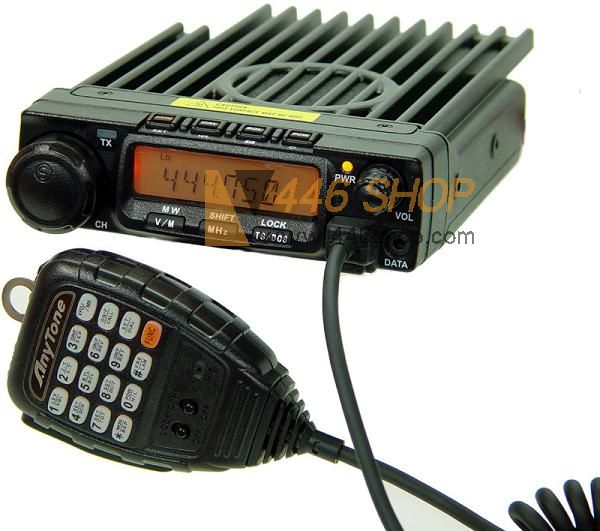
In the beginning, there was the AnyTone AT-588. The market beheld it, and saw that it was good.
The AT-588 was the standard for Chinese FM mobiles. Originally marketed for taxis, delivery vehicle fleets, construction sites, and quasi-law enforcement use, the success of the BaoFeng HT revealed the potential of the amateur radio market. At the time, Japanese FM monoband radios were much more expensive than now. The emergence of the AT-588 put pressure on Japanese manufacturers to both lower prices and also come up with more "basic" mobiles. It's currently not hard to find a Kenwood TM-281A or Yaesu FT-1900R for around $160, while you would have paid around $230 two years ago. The AT-588 is now selling for roughly the same price as its Japanese counterparts, which squeezes Anytone's profit margins.
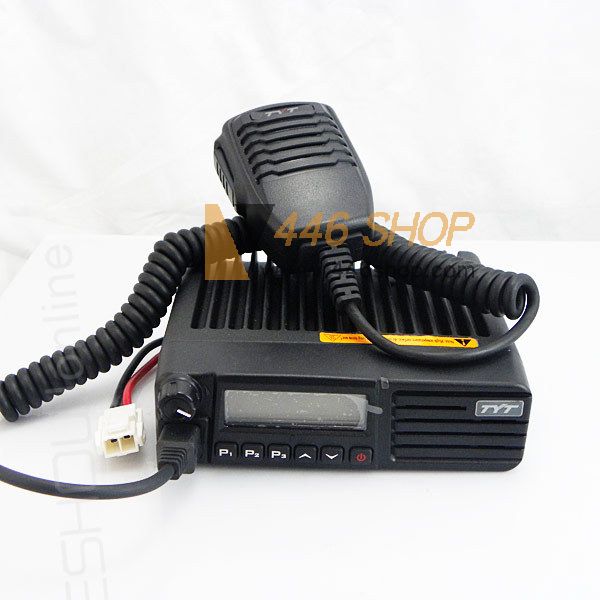
While AnyTone bore the development costs of the AT-588 (dies and tooling, engineering, supplier prototyping of components, testing, etc.), other Chinese manufacturers were able to simply copy the AT-588 and save those costs. The TYT TH-9000 is virtually identical to the AT-588, except for the silk-screening on the front and the die-cast case around the speaker. TYT's more 'original' monoband -- the TH-8900 -- didn't sell as well. AnyTone successfully sued TYT in Chinese courts (amazing in itself) for what amounted to copyright infringement (which is highly ironic). The TH-9000 was ordered to be discontinued.
Thus, the TH-9000D was born, which was imperceptibly changed just enough to avoid further legal action.
Other Chinese manufacturers, however, are jumping into the fray and under-cutting the under-cutters.
Take a look at the TID TD-M558 monoband, which is currently arriving on the market. TID even copied the lousy microphone design that TYT 'pioneered'. Or check out the Vitai VT-5188 monoband FM radio. The Zastone MP-600 is another option. Or the identical Luiton LT-9000 monoband. How about the VGC VR-2200? The AnyTalk TM-8600 at least mixes things up a bit by putting the mic jack on the left side of the radio and re-arranging the buttons.
If you are worried that a Motorola CM-300 monoband rig might seem too pretentious, you can get a Motola (no, that's not mis-spelled) EM-300 from KST.
Notice any similarities between the HYS TC-171 and the (now discontinued) Kenwood TM-271 monoband?
Also intriguing is the Vitai FT-857D. It's a copy of the Yaesu FT-857D, only with a detachable face. They didn't even bother to change the model name. It ships with a copy of the Yaesu manual, in fact. It seems that Vitai is actually a supplier to the big Japanese brands Icom, Kenwood, Yaesu, and also Motorola. Those hams that spurn "Chinese junk" and buy a Japanese model may very well end up with a Chinese-made radio.
I think that it's unlikely we'll see a flood of knock-off HF radios, however.. The market for AM/SSB/CW HF radios is quite small, when compared to FM. And FM is only used on 10M (as far as HF goes), and even then only by General Class licensees or above.
Certainly, YouKits has had some success with QRP CW rigs (HB-1A and its variants). They are currently developing a 40/20/15/10M SSB/CW 20W portable rig -- the TJ5A -- for $455 (assembled) with battery and pack. And the 5W TJ2B (think large HT form-factor) for 60/40/20/17/15M SSB radio has been popular, and can be made to work PSK with external equipment. CRKits also makes a very bare-bones 40M SSB single-frequency 10W rig for $220 assembled with speaker mic. And $80 will get you their bare-bones 3W CW 40M single-frequency transceiver (assembled and without batteries).
But these are all niche efforts that don't involve copying, and aren't even priced particularly competitive level. With new 100W HF transceivers starting at $1k, these are more aimed at the entry-level ham market, though not at Technician Class licensees -- which are about half of the U.S. market. I think that it's quite doubtful that we will ever see cheap Chinese 6M SSB/CW rigs or 2M/1.25M/70cm "weak signal" radios.
There aren't even very good 10M options. The AnyTone AT-5555 is a relatively low-power rig, with 12W on CW and only 30W on SSB, and costs $210. This is pretty much the standard price/power range for most 10M "weak-signal" rigs, regardless of who makes them. A bit more promising is the AnyTone AT-6666, which is available for $250. It offers 60W on SSB. It has no CW capability, however.
While the Chinese manufacturers have revolutionised 2M and UHF FM ham radio, it seems unlikely to spread further. The target market was never amateur radio anyway; it was commercial and public service users forced into narrow-band by the FCC. That effort was largely stymied by the FCC's Part 90 standards and certification. The "VFO" button on the BaoFengs, for example, made them forbidden for Part 90 use. It didn't stop them from being certified for Part 95 use, though. Thus, the Chinese settled for the amateur radio market, while developing new models that did comply with Part 90.
The future will probably hold further copying, as some manufacturers try to cash in on the fading wave. But prices really can't fall much lower, and the amateur market is already saturated. It seems as if every ham has at least one Chinese HT, especially new hams. There's a limit to how many people are willing to get a licence, and new hams often find that their shiny, new Chinese HT or mobile is met with derisive scorn by those that they hoped to join. In five years, we'll look back on this as some kind of Golden Age of growth for the hobby, as so many of those even mildly intrigued by the potential of amateur radio will have been dissuaded from pursuing it -- and will have told others what to expect.
The AT-588 was the standard for Chinese FM mobiles. Originally marketed for taxis, delivery vehicle fleets, construction sites, and quasi-law enforcement use, the success of the BaoFeng HT revealed the potential of the amateur radio market. At the time, Japanese FM monoband radios were much more expensive than now. The emergence of the AT-588 put pressure on Japanese manufacturers to both lower prices and also come up with more "basic" mobiles. It's currently not hard to find a Kenwood TM-281A or Yaesu FT-1900R for around $160, while you would have paid around $230 two years ago. The AT-588 is now selling for roughly the same price as its Japanese counterparts, which squeezes Anytone's profit margins.
While AnyTone bore the development costs of the AT-588 (dies and tooling, engineering, supplier prototyping of components, testing, etc.), other Chinese manufacturers were able to simply copy the AT-588 and save those costs. The TYT TH-9000 is virtually identical to the AT-588, except for the silk-screening on the front and the die-cast case around the speaker. TYT's more 'original' monoband -- the TH-8900 -- didn't sell as well. AnyTone successfully sued TYT in Chinese courts (amazing in itself) for what amounted to copyright infringement (which is highly ironic). The TH-9000 was ordered to be discontinued.

Thus, the TH-9000D was born, which was imperceptibly changed just enough to avoid further legal action.
Other Chinese manufacturers, however, are jumping into the fray and under-cutting the under-cutters.
Take a look at the TID TD-M558 monoband, which is currently arriving on the market. TID even copied the lousy microphone design that TYT 'pioneered'. Or check out the Vitai VT-5188 monoband FM radio. The Zastone MP-600 is another option. Or the identical Luiton LT-9000 monoband. How about the VGC VR-2200? The AnyTalk TM-8600 at least mixes things up a bit by putting the mic jack on the left side of the radio and re-arranging the buttons.
If you are worried that a Motorola CM-300 monoband rig might seem too pretentious, you can get a Motola (no, that's not mis-spelled) EM-300 from KST.
Notice any similarities between the HYS TC-171 and the (now discontinued) Kenwood TM-271 monoband?
Also intriguing is the Vitai FT-857D. It's a copy of the Yaesu FT-857D, only with a detachable face. They didn't even bother to change the model name. It ships with a copy of the Yaesu manual, in fact. It seems that Vitai is actually a supplier to the big Japanese brands Icom, Kenwood, Yaesu, and also Motorola. Those hams that spurn "Chinese junk" and buy a Japanese model may very well end up with a Chinese-made radio.
I think that it's unlikely we'll see a flood of knock-off HF radios, however.. The market for AM/SSB/CW HF radios is quite small, when compared to FM. And FM is only used on 10M (as far as HF goes), and even then only by General Class licensees or above.
Certainly, YouKits has had some success with QRP CW rigs (HB-1A and its variants). They are currently developing a 40/20/15/10M SSB/CW 20W portable rig -- the TJ5A -- for $455 (assembled) with battery and pack. And the 5W TJ2B (think large HT form-factor) for 60/40/20/17/15M SSB radio has been popular, and can be made to work PSK with external equipment. CRKits also makes a very bare-bones 40M SSB single-frequency 10W rig for $220 assembled with speaker mic. And $80 will get you their bare-bones 3W CW 40M single-frequency transceiver (assembled and without batteries).
But these are all niche efforts that don't involve copying, and aren't even priced particularly competitive level. With new 100W HF transceivers starting at $1k, these are more aimed at the entry-level ham market, though not at Technician Class licensees -- which are about half of the U.S. market. I think that it's quite doubtful that we will ever see cheap Chinese 6M SSB/CW rigs or 2M/1.25M/70cm "weak signal" radios.
There aren't even very good 10M options. The AnyTone AT-5555 is a relatively low-power rig, with 12W on CW and only 30W on SSB, and costs $210. This is pretty much the standard price/power range for most 10M "weak-signal" rigs, regardless of who makes them. A bit more promising is the AnyTone AT-6666, which is available for $250. It offers 60W on SSB. It has no CW capability, however.
While the Chinese manufacturers have revolutionised 2M and UHF FM ham radio, it seems unlikely to spread further. The target market was never amateur radio anyway; it was commercial and public service users forced into narrow-band by the FCC. That effort was largely stymied by the FCC's Part 90 standards and certification. The "VFO" button on the BaoFengs, for example, made them forbidden for Part 90 use. It didn't stop them from being certified for Part 95 use, though. Thus, the Chinese settled for the amateur radio market, while developing new models that did comply with Part 90.
The future will probably hold further copying, as some manufacturers try to cash in on the fading wave. But prices really can't fall much lower, and the amateur market is already saturated. It seems as if every ham has at least one Chinese HT, especially new hams. There's a limit to how many people are willing to get a licence, and new hams often find that their shiny, new Chinese HT or mobile is met with derisive scorn by those that they hoped to join. In five years, we'll look back on this as some kind of Golden Age of growth for the hobby, as so many of those even mildly intrigued by the potential of amateur radio will have been dissuaded from pursuing it -- and will have told others what to expect.
Saturday, 9 August 2014
Radio City fiasco
Two months ago, I took my FT-897D into Radio City for repairs. I told the person writing up the repair ticket that it suddenly stopped receiving for no reason. I looked at the ticket, and that was, word-for-word, what was on it. That was the sum total of my knowledge of the situation. How much description do you need to convey that a radio does not receive?
A few days later, of course, I found out that this is a fairly common problem with the Yaesu FT-897D. The Service Menu becomes corrupted, and it needs a software alignment. Had I known earlier, I could have merely written down the software parameters and entered them in. Yaesu rates this a 20-minute job in their repair facilities. I felt relieved, because I was sure that a competent tech would know about this situation with the model, and be able to align it fairly quickly. Had the the radio not been sitting in a pile at Radio City at that moment, I could have confirmed for myself if this was the issue and told them exactly what I needed done.
Today, however, I got a postcard from Radio City asking for "more information" before they could start work on the radio. Did they even turn it on? How could someone turn it on, connect it to an antenna and, hearing nothing, wonder what was wrong with this radio? So they want me to call them with "more information". Of course, they are closed when I call, and they have no voicemail. No email, either -- just a "sweepstakes entry" form. Even when I do reach them, what am I supposed to tell them? It's been two months since I've seen the radio, and the symptoms are hardly fresh in my memory at this point.
I could have sent this to Yaesu three times in the two months that it's sat there at Radio City, and all that they've done is scratched their heads over what "suddenly stopped receiving for no reason" means. I'm no expert, but I'd start by looking at the receiver, if I were a service tech presented with that information. KE0NA (Dave) heard me talking about it on the air, and immediately connected the dots with the Service Menu alignment. He doesn't repair amateur radio transceivers for a living, either. It should take under two minutes to determine if that's the problem. It probably took them longer to scribble out the postcard and mail it, asking me for "more information".
If you take your car to a mechanic and tell them, "The alternator light is blinking", that should be enough "information". I shouldn't need to mention that the headlights seem dimmer, because the mechanic would probably notice that if he/she would actually start the car. If your car sat in their lot for two weeks, and then you got a postcard asking for "more information" on the problem, how irritated would you be? Am I expected to diagnose the radio's issue and tell them exactly which part to replace? If they would simply turn the radio on and try to receive a signal, they would know everything that I know immediately. "The S-meter reads very low on repeaters that are normally full-scale, and these repeaters come in very weakly" is pretty much another way of saying that the radio receives poorly. Would that offer the clarification that they lack? Because that's about all that I can give them.
So, I'm just going to pick up the radio and send it Yaesu. In the two months I've waited for this postcard, I've heard stories from other hams with unhappy experiences trying Radio City for repairs. It seems that the usual routine is a six-month wait, resulting in a radio that has the exact same problem that you brought it in there for. You're basically paying them to store your radio for several months. Since it seems obvious that they're unaware of this Service Menu problem, I'll confirm for myself that the software parameters have been reset. Even if that isn't the issue, I feel more confident that a professional technician will be able to figure it out than whoever is playing one at Radio City.
I often hear hams extolling the virtues of Radio City, and the need to support them with your business. Yet, more often than not, when you go there looking for something (assuming that they actually open) you find that it's not in stock. Sure, they can order it. Hey, I can order it, too.
Maybe there's a reason that they are the only store within 500 miles. Maybe it's an unsustainable business model. I'm puzzled over what "value" they are actually offering. Advice? There's plenty of that on the air. The chance to fondle a piece of gear before buying it? Ask someone that owns it already to let you play with it. Or return it if you find out that it's not what you're looking for. Is that a hassle? So is taking a day off of work to drive out to Mounds View because their hours cater to retired people. So is calling them from work because they don't have email or voicemail.
When I pick up my FT-897D from Radio City, it will most likely be the last dealings with them on my part.
A few days later, of course, I found out that this is a fairly common problem with the Yaesu FT-897D. The Service Menu becomes corrupted, and it needs a software alignment. Had I known earlier, I could have merely written down the software parameters and entered them in. Yaesu rates this a 20-minute job in their repair facilities. I felt relieved, because I was sure that a competent tech would know about this situation with the model, and be able to align it fairly quickly. Had the the radio not been sitting in a pile at Radio City at that moment, I could have confirmed for myself if this was the issue and told them exactly what I needed done.
Today, however, I got a postcard from Radio City asking for "more information" before they could start work on the radio. Did they even turn it on? How could someone turn it on, connect it to an antenna and, hearing nothing, wonder what was wrong with this radio? So they want me to call them with "more information". Of course, they are closed when I call, and they have no voicemail. No email, either -- just a "sweepstakes entry" form. Even when I do reach them, what am I supposed to tell them? It's been two months since I've seen the radio, and the symptoms are hardly fresh in my memory at this point.
I could have sent this to Yaesu three times in the two months that it's sat there at Radio City, and all that they've done is scratched their heads over what "suddenly stopped receiving for no reason" means. I'm no expert, but I'd start by looking at the receiver, if I were a service tech presented with that information. KE0NA (Dave) heard me talking about it on the air, and immediately connected the dots with the Service Menu alignment. He doesn't repair amateur radio transceivers for a living, either. It should take under two minutes to determine if that's the problem. It probably took them longer to scribble out the postcard and mail it, asking me for "more information".
If you take your car to a mechanic and tell them, "The alternator light is blinking", that should be enough "information". I shouldn't need to mention that the headlights seem dimmer, because the mechanic would probably notice that if he/she would actually start the car. If your car sat in their lot for two weeks, and then you got a postcard asking for "more information" on the problem, how irritated would you be? Am I expected to diagnose the radio's issue and tell them exactly which part to replace? If they would simply turn the radio on and try to receive a signal, they would know everything that I know immediately. "The S-meter reads very low on repeaters that are normally full-scale, and these repeaters come in very weakly" is pretty much another way of saying that the radio receives poorly. Would that offer the clarification that they lack? Because that's about all that I can give them.
So, I'm just going to pick up the radio and send it Yaesu. In the two months I've waited for this postcard, I've heard stories from other hams with unhappy experiences trying Radio City for repairs. It seems that the usual routine is a six-month wait, resulting in a radio that has the exact same problem that you brought it in there for. You're basically paying them to store your radio for several months. Since it seems obvious that they're unaware of this Service Menu problem, I'll confirm for myself that the software parameters have been reset. Even if that isn't the issue, I feel more confident that a professional technician will be able to figure it out than whoever is playing one at Radio City.
I often hear hams extolling the virtues of Radio City, and the need to support them with your business. Yet, more often than not, when you go there looking for something (assuming that they actually open) you find that it's not in stock. Sure, they can order it. Hey, I can order it, too.
Maybe there's a reason that they are the only store within 500 miles. Maybe it's an unsustainable business model. I'm puzzled over what "value" they are actually offering. Advice? There's plenty of that on the air. The chance to fondle a piece of gear before buying it? Ask someone that owns it already to let you play with it. Or return it if you find out that it's not what you're looking for. Is that a hassle? So is taking a day off of work to drive out to Mounds View because their hours cater to retired people. So is calling them from work because they don't have email or voicemail.
When I pick up my FT-897D from Radio City, it will most likely be the last dealings with them on my part.
Wednesday, 6 August 2014
KD0KJI update
Al Samson (KD0KJI) is one of the founders of Aerials In The Park, and a regular on the 444.425 repeater. I'm passing along a brief statement from him about AITP, local QRM, and some incidents of abusive behaviour on the .425 recently.
----------------------------------------------------------------
Hello, friends. This is KD0KJI.
I am not doing too well health wise; maybe too much fun in the sun at Oshkosh last week. I have been slowly falling behind due to old age; just cannot keep up. My spirits are up, and I will be at Aerials Saturday to do what I can. I will bring my canopy easy up to make sure of shade. All through the park is abundant oak trees and a real good pavilion. Now, on to other things.
You may have noticed spark noise on the radio lately. I suspect that it is precipitation static caused by atoms getting out of balance and free flying about until they match electrons and protons.
You may have noticed interference on the 444.425 lately. Be fore-warned that I will not tolerate this kind of behavior, and will direction find you and eradicate you. Let's act like civilized hams.
Also, I will have my KX 3 with amp and some interesting Aerials. Did you notice how much I like Aerials better than antenna? 73 from me. ROCK ON - Life is Good.
More on precipitation static.
Tuesday, 5 August 2014
AITP update 8/5/14
The "official" site for the event is here, for your reference. There will be a 'talk-in' set up on the VHF .670 and the UHF .525 repeaters for those of you struggling to find the park.
KD0KJI (Al) visited the Turtle Lake Park today and pronounced it to be "really nice". There are oaks for dipoles and a well-built pavillion, and lots of parking.
The plans for the .425 gang are taking shape. We will have a screened-in canopy for shelter, and to make it easier to find us in the crowd. The 1.25M repeater is not likely to happen,but N0YNT (Matt) is making plans to do a demonstration on tuning a duplexer. It seems as if Matt is working on putting up another GMRS repeater on Moos Tower on the East Bank campus, and the duplexer tuning will be for that project. The procedure is the same, regardless of the band, so make it a point to soak up some knowledge from Matt while you're there. KD0UIH (Chuck) is slated to operate an HF PSK31 station, so if you've ever wondered how to set something like that up and how PSK works, you can find that out Saturday. KD0KJI, KD0ZWN, and N0RUA will be operating portable HF stations, so if you're a Tech (like me), it's your chance to plumb the mysteries of SSB and operate outside of your licence Class (under supervision, of course). I'll be running the FM end of things. Here's the "sked":
With so many stations, interference could be an issue.
Got an idea for a demo? Hey, why not? Let me or Matt know and we'll work things out.
Come down to the park, or play along at home. This sounds like it's going to be the biggest AITP yet!
EDIT: N0YNT (Matt) has decided that the logistics of the duplexer tuning were impractical, so that demonstration has been cancelled.
KD0KJI (Al) visited the Turtle Lake Park today and pronounced it to be "really nice". There are oaks for dipoles and a well-built pavillion, and lots of parking.
The plans for the .425 gang are taking shape. We will have a screened-in canopy for shelter, and to make it easier to find us in the crowd. The 1.25M repeater is not likely to happen,
- FM repeaters from 12:00 to 1 PM ( UHF: 444.425, 444.750, 444.375 VHF: 145.290, 145.450, 146.850)
- 1.25M FM on the 223.940 repeater from 1:15 PM to 1:45 PM
- 1.25M FM simplex on 223.500 from 1:45 PM to 2 PM
- GMRS FM on the 462.650+ (PL 141.3) repeater from 2:15 PM to 2:30 PM
With so many stations, interference could be an issue.
Got an idea for a demo? Hey, why not? Let me or Matt know and we'll work things out.
Come down to the park, or play along at home. This sounds like it's going to be the biggest AITP yet!
EDIT: N0YNT (Matt) has decided that the logistics of the duplexer tuning were impractical, so that demonstration has been cancelled.
Sunday, 3 August 2014
UHF repeater update 8/3/14
The MARA-operated UHF repeater on 444.800+ (PL 114.8) has been off-the-air for over a week now. It's been an unusually-reliable and unusually-powerful part of the metro UHF infrastructure for as long as I've been licensed, which is all that I can personally speak to.
The MARA Sunday Night Swapnet is tonight at 7 PM on the 146.850- (no PL) machine. I'll be listening to see if there's any news on the .800's status. Let's hope that it returns to the air soon.
The new UHF HandiHam repeater on 444.925+ (PL 114.8) is definitely working and is S7 here in Plymouth. It doesn't seem to be linked to the 145.450 yet, and I can't be sure if it's linked to the UHF .650 because of a lot of local interference on that frequency. Give it a try and see if you can reach it. Technically, it's still in "Testing", but it is operational.
EDIT: As of last night (Sunday), the MARA .800 was back on-the-air and the HandiHam .925 was down.
The MARA Sunday Night Swapnet is tonight at 7 PM on the 146.850- (no PL) machine. I'll be listening to see if there's any news on the .800's status. Let's hope that it returns to the air soon.
The new UHF HandiHam repeater on 444.925+ (PL 114.8) is definitely working and is S7 here in Plymouth. It doesn't seem to be linked to the 145.450 yet, and I can't be sure if it's linked to the UHF .650 because of a lot of local interference on that frequency. Give it a try and see if you can reach it. Technically, it's still in "Testing", but it is operational.
EDIT: As of last night (Sunday), the MARA .800 was back on-the-air and the HandiHam .925 was down.
Saturday, 2 August 2014
August AITP is next weekend
Just a reminder that the August installment of Aerials In The Park is on the 9th (next Saturday).
With rain being the main feature of the previous two events, I think that we deserve dry weather next weekend. The weather forecast differs with that opinion, however.
The two shelters are booked solid for the August and September events, which means that it's very likely that parking will be a problem once again. The place that we were at last month (next to the small picnic shelter) is less than ideal, though it had ample parking. There are hills on three sides, though it's certainly possible to operate on those hills. The small parking bays at the gate are actually at a slightly higher elevation than the Pavillion. The first parking lot (on the left) is a nice alternative spot with a lot of open space around it and it's fairly empty. I'm not sure why people insist on jamming into the Pavillion lot and risking a parking ticket, when there are other options.
I'm still without my Yaesu FT-897D, as it's still waiting for someone at Radio City to look at it. That means that I'll be using my HT, or taking turns on other people's rigs. If nothing else, I'll be working FM repeaters and trying some 1.25M FM simplex. Anyone from outside of the local area can certainly EchoLink in to the UHF 444.425+ repeater (W0YC) or the VHF 145.290- (N0FKM node 268460) repeater. I'll be monitoring those machines, and pretty much everybody there has an HT. Officially (or as "official" as an ad hoc event such as this can be), the 146.670- (PL 114.8) is the "talk-in" repeater, but it has no EchoLink node.
For non-hams, I plan to set aside a 15-minute slot to operate on the local 462.650+ (PL 141.3) GMRS repeater at the University of Minnesota. If you have a repeater-capable GMRS radio, then you can join in on the fun. Most Chinese HTs (BaoFeng, PuXing, Wouxon, etc.) will operate on GMRS, using a 5 MHz offset and a PL tone. Strictly speaking, these radios aren't certified for this use because of the presence of the "VFO" button on the front panel, but nobody is going to know how you are getting in to the repeater, either. Of course, someone in your family needs to have a GMRS licence for this kind of thing, and you should use their callsign. The specific time slot will be published here in the upcoming week as plans solidify.
I'd encourage anyone in the metro to come down to the park, even if its just to walk around and say "Hi!" to the various amateur radio operators there. Set up a card table and a folding chair, string up that wire dipole on a friendly tree, and start tapping or talking. Or just operate from your vehicle. For me, AITP is about experimenting and figuring things out from first-hand experience. For others, it's a chance to show off their radios or antennae.
Maybe next year there will be sufficient organisation to come up with the $385 to rent the Pavillion. That's only $20 from 20 people, after all.
The gang from the .425 hasn't had a chance to come up with a formal plan for the event yet, but I'll update this post (or create a new one) when we do. Of course, other "factions" will have their own plans. I can't speak to those, but they will probably involve the grassy area to the north of the Pavillion. It's a big park, and if you're willing to carry your gear you can easily find a shady spot on a hill and create your own scene.
I'm told that there will a D-Star demonstration at the August AITP, but I'm without details as to time or specific location.
EDIT: Preliminary discussion with the .425 group places us in the Pavilion area, but we're discussing a back-up option should parking be too limited next Saturday. It will be another collaborative effort for the HF antenna, with KD0UIH (Chuck) operating portable PSK31 on a yet-to-be-determined band. KD0ZWN (Josh) will be operating SSB on 15M and 17M. It's possible that we will have a 1.25M FM repeater set up for portable operation (again). It would be operating on the SNP (Shared Non-Protected) 224.240- pair, since we don't have time to get something co-ordinated. Bring your 222 MHz HT and "ker-chunk" it, or give us signal reports from another location. More to come, of course, as a few other key players have yet to weigh in with their plans.
EDIT: The event has now been moved to Turtle Lake Park. It's a lot smaller, but has a big open area off the main road and somewhat dipole-friendly trees near the parking lot.
With rain being the main feature of the previous two events, I think that we deserve dry weather next weekend. The weather forecast differs with that opinion, however.
The two shelters are booked solid for the August and September events, which means that it's very likely that parking will be a problem once again. The place that we were at last month (next to the small picnic shelter) is less than ideal, though it had ample parking. There are hills on three sides, though it's certainly possible to operate on those hills. The small parking bays at the gate are actually at a slightly higher elevation than the Pavillion. The first parking lot (on the left) is a nice alternative spot with a lot of open space around it and it's fairly empty. I'm not sure why people insist on jamming into the Pavillion lot and risking a parking ticket, when there are other options.
I'm still without my Yaesu FT-897D, as it's still waiting for someone at Radio City to look at it. That means that I'll be using my HT, or taking turns on other people's rigs. If nothing else, I'll be working FM repeaters and trying some 1.25M FM simplex. Anyone from outside of the local area can certainly EchoLink in to the UHF 444.425+ repeater (W0YC) or the VHF 145.290- (N0FKM node 268460) repeater. I'll be monitoring those machines, and pretty much everybody there has an HT. Officially (or as "official" as an ad hoc event such as this can be), the 146.670- (PL 114.8) is the "talk-in" repeater, but it has no EchoLink node.
For non-hams, I plan to set aside a 15-minute slot to operate on the local 462.650+ (PL 141.3) GMRS repeater at the University of Minnesota. If you have a repeater-capable GMRS radio, then you can join in on the fun. Most Chinese HTs (BaoFeng, PuXing, Wouxon, etc.) will operate on GMRS, using a 5 MHz offset and a PL tone. Strictly speaking, these radios aren't certified for this use because of the presence of the "VFO" button on the front panel, but nobody is going to know how you are getting in to the repeater, either. Of course, someone in your family needs to have a GMRS licence for this kind of thing, and you should use their callsign. The specific time slot will be published here in the upcoming week as plans solidify.
I'd encourage anyone in the metro to come down to the park, even if its just to walk around and say "Hi!" to the various amateur radio operators there. Set up a card table and a folding chair, string up that wire dipole on a friendly tree, and start tapping or talking. Or just operate from your vehicle. For me, AITP is about experimenting and figuring things out from first-hand experience. For others, it's a chance to show off their radios or antennae.
Maybe next year there will be sufficient organisation to come up with the $385 to rent the Pavillion. That's only $20 from 20 people, after all.
The gang from the .425 hasn't had a chance to come up with a formal plan for the event yet, but I'll update this post (or create a new one) when we do. Of course, other "factions" will have their own plans. I can't speak to those, but they will probably involve the grassy area to the north of the Pavillion. It's a big park, and if you're willing to carry your gear you can easily find a shady spot on a hill and create your own scene.
I'm told that there will a D-Star demonstration at the August AITP, but I'm without details as to time or specific location.
EDIT: Preliminary discussion with the .425 group places us in the Pavilion area, but we're discussing a back-up option should parking be too limited next Saturday. It will be another collaborative effort for the HF antenna, with KD0UIH (Chuck) operating portable PSK31 on a yet-to-be-determined band. KD0ZWN (Josh) will be operating SSB on 15M and 17M. It's possible that we will have a 1.25M FM repeater set up for portable operation (again). It would be operating on the SNP (Shared Non-Protected) 224.240- pair, since we don't have time to get something co-ordinated. Bring your 222 MHz HT and "ker-chunk" it, or give us signal reports from another location. More to come, of course, as a few other key players have yet to weigh in with their plans.
EDIT: The event has now been moved to Turtle Lake Park. It's a lot smaller, but has a big open area off the main road and somewhat dipole-friendly trees near the parking lot.